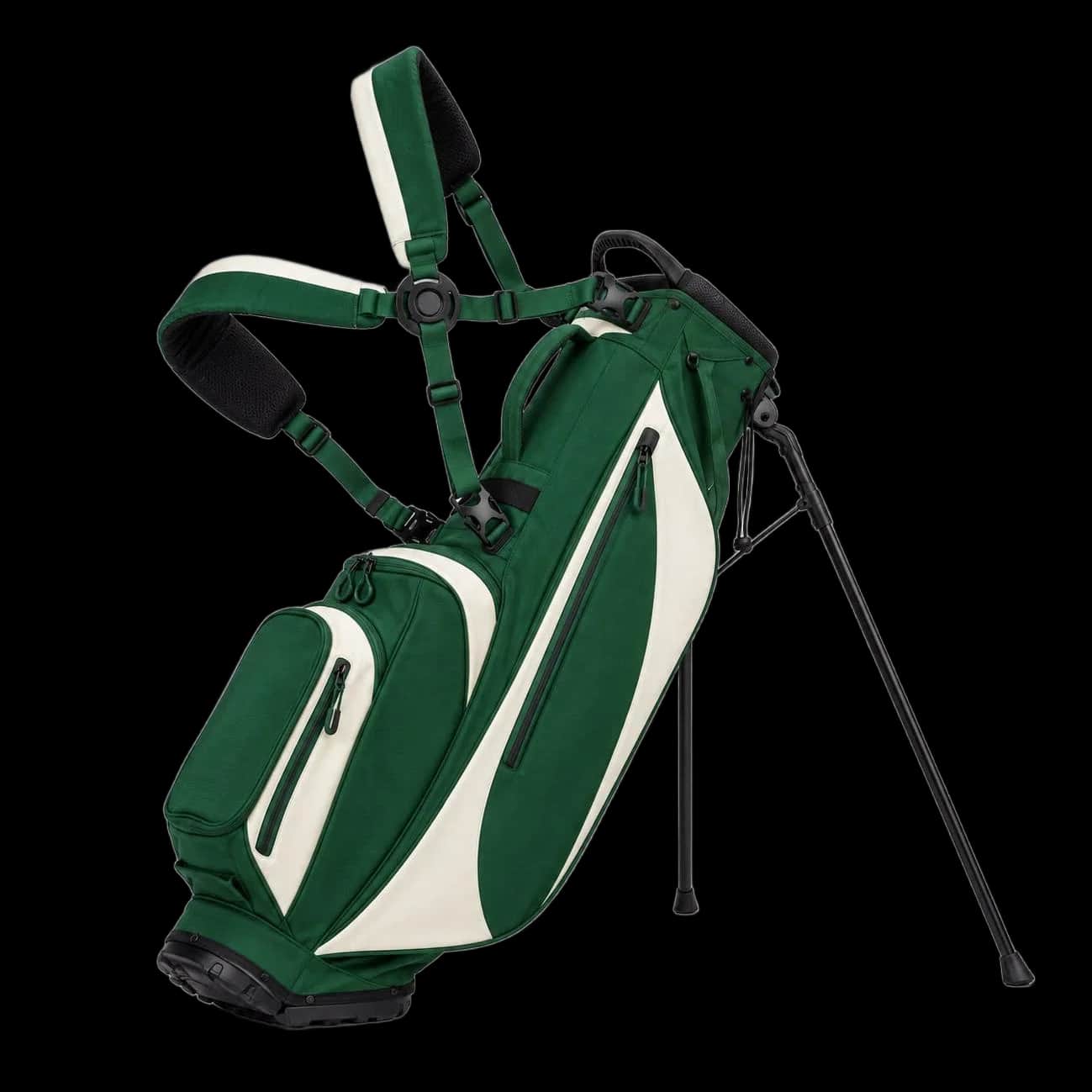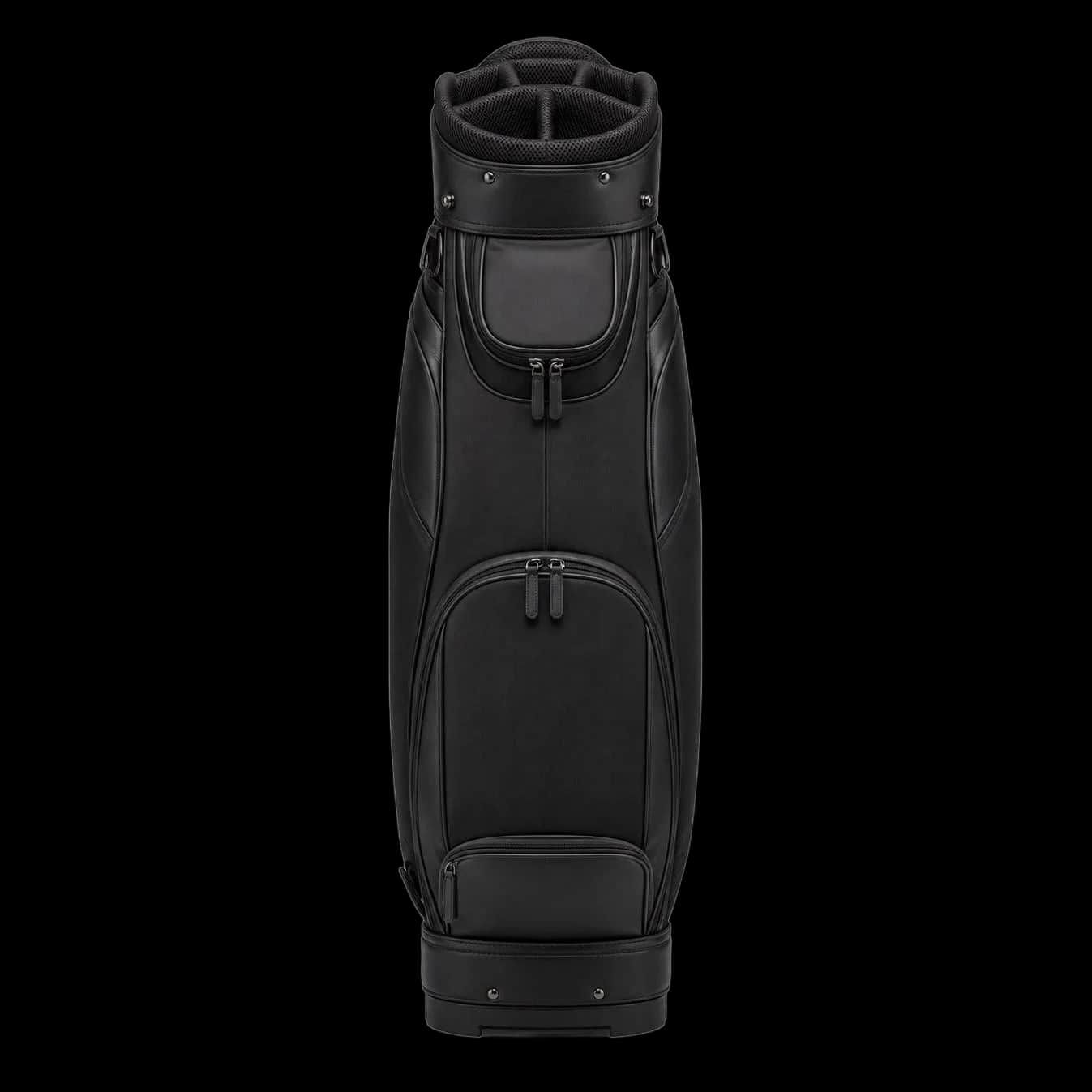
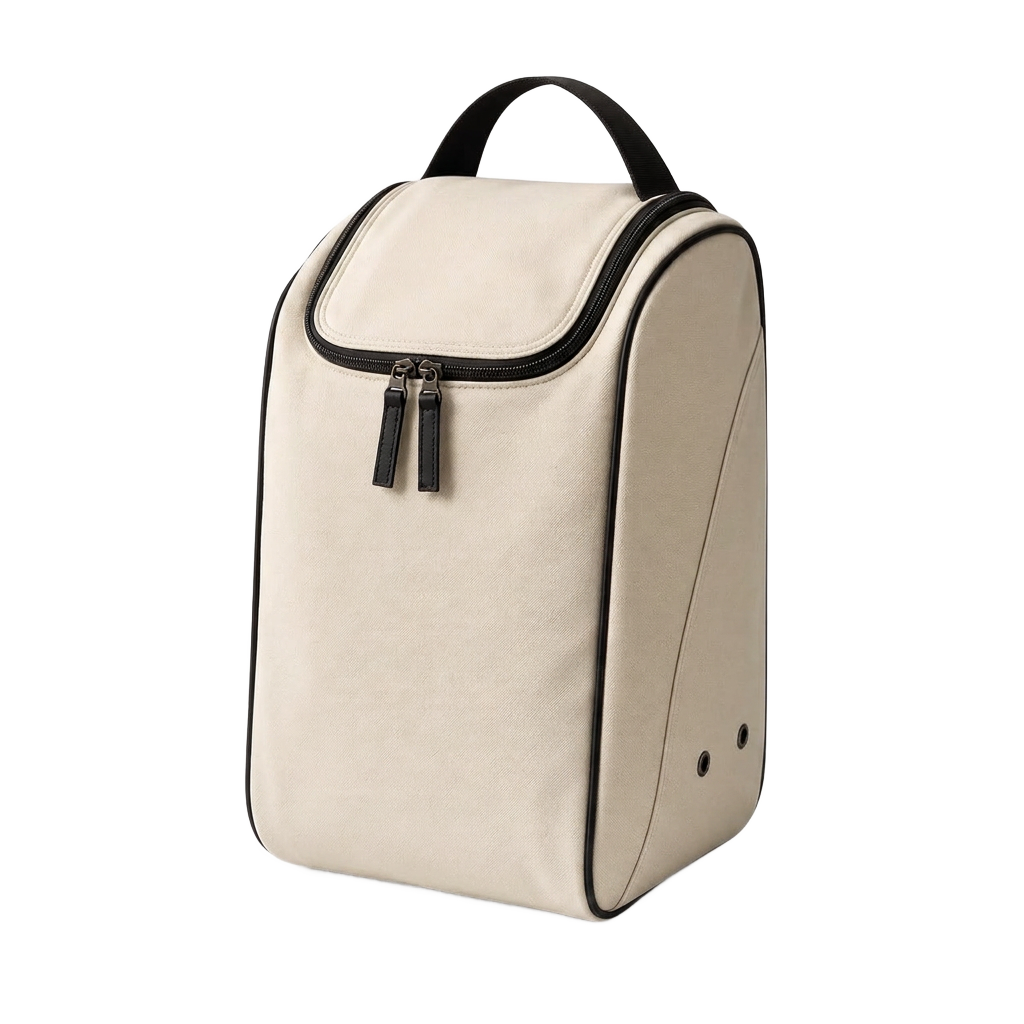
Golf Shoe Bag
In 1848, a Scottish clergyman discovered that a chunk of tree sap, heated and hand-rolled, flew straighter and cheaper than a ball stuffed with boiled feathers. The gutta-percha ball ended a 400-year-old industry overnight and made golf affordable for the first time. A century and a half later, the same instinct — better materials, tighter tolerances — put multi-layer urethane balls and forged titanium drivers into the bags of weekend players who will never break 90. Golf has always sold precision as much as it sells the game.
The same factories that produce for houses like Celine and Balenciaga can produce this piece, directly to you
GABI
Make it yours
Material gradeMOQ 50
Colour
Golf Shoe Bag
In 1848, a Scottish clergyman discovered that a chunk of tree sap, heated and hand-rolled, flew straighter and cheaper than a ball stuffed with boiled feathers. The gutta-percha ball ended a 400-year-old industry overnight and made golf affordable for the first time. A century and a half later, the same instinct — better materials, tighter tolerances — put multi-layer urethane balls and forged titanium drivers into the bags of weekend players who will never break 90. Golf has always sold precision as much as it sells the game.
The same factories that produce for houses like Celine and Balenciaga can produce this piece, directly to you
GABI
Make it yours
Material gradeMOQ 50
Colour
In 1848, a Scottish clergyman discovered that a chunk of tree sap, heated and hand-rolled, flew straighter and cheaper than a ball stuffed with boiled feathers. The gutta-percha ball ended a 400-year-old industry overnight and made golf affordable for the first time. A century and a half later, the same instinct — better materials, tighter tolerances — put multi-layer urethane balls and forged titanium drivers into the bags of weekend players who will never break 90. Golf has always sold precision as much as it sells the game.
The Featherie Economy — and Its End
For nearly 400 years, golf balls were "featheries": a horsehide pouch stuffed with boiled goose feathers, hand-sewn while damp so it would shrink tight around the packed filling. A skilled maker produced perhaps four a day, and a single ball could cost as much as a golf club. In 1848, Reverend Robert Adams Paterson introduced the gutta-percha ball — moulded from the dried sap of the Malaysian sapodilla tree — which was cheaper, more durable, and, once players noticed that scuffed, nicked balls flew truer than smooth ones, the direct ancestor of the dimple.
The dimple pattern itself was formalized by the early 1900s once aerodynamicists established that a textured surface reduces drag by controlling the turbulent boundary layer around the ball in flight. Modern balls carry 300–500 dimples in patterns engineered and patented by manufacturers, with dimple depth measured in thousandths of an inch — differences invisible to the eye but regulated down to the millimeter by the USGA and R&A conforming ball list.
Shaft materials tell a parallel story: hickory wood dominated until the 1930s, when steel shafts were legalized and standardized the game feel across manufacturers. Graphite composite shafts arrived in the 1970s, cutting weight and letting clubmakers redistribute mass into the clubhead. Titanium driver heads followed in the 1990s, allowing larger, thinner-walled clubfaces than steel could support at a swingable weight — the technical shift behind the "bigger driver" era.
Leather goods remain the category other technical layer: golf gloves are almost universally cut from cabretta — a fine-grained sheepskin prized for its combination of grip, breathability, and break-in speed compared to cowhide. Bag and headcover leather-look materials have shifted heavily toward PU and coated canvas for cost and water resistance, while genuine leather persists at the premium end for cart bags and travel covers.
FAQ
A standard 3-ball sleeve in two-piece construction (China, 500-unit run) lands around $2–3.50; premium multi-layer urethane-cover balls matching tour-level spin characteristics run $5–8 per sleeve landed, largely driven by the urethane cover cost and tighter compression tolerances.
No — golf ball cores are compression-molded and covers are either cast or injection-molded to sub-millimeter roundness tolerances. This requires a dedicated ball factory with compression testing equipment; a general sporting goods or rubber factory cannot hit the roundness and compression consistency needed for playable balls.
Stand bags and cart bags typically require 100–300 units per colorway from Chinese factories due to the number of components (frame, straps, dividers, zippers) that must be tooled or sourced together; boutique factories in Vietnam or Portugal can sometimes go lower at a cost premium.
Only if marketed as tournament-legal. Balls, clubs, and gloves can be sold without conformance testing for casual/recreational markets, but any claim of "USGA conforming" requires the specific model to appear on the official conforming list — a separate submission and testing process, not something a factory can self-certify.
Cabretta sheepskin is the category standard for feel and grip; synthetic microfiber is the common lower-cost substitute and performs better in wet conditions but with a shorter break-in feel. Always specify which — "leather glove" alone is ambiguous between the two.
Cart bags carry more structure (rigid base, more dividers, no legs) and are typically built with heavier-denier fabric since they aren't carried, only wheeled or strapped to a cart — more material and reinforcement per unit than a lightweight stand bag designed to be carried 18 holes.
Golf balls fall under HS 9506.32; clubs and most golf-specific bags under 9506.39/9506.91 depending on component; general sports bags may fall under HS 4202 luggage codes instead — get the classification confirmed per SKU, as duty rates differ meaningfully between sporting-goods and luggage codes.