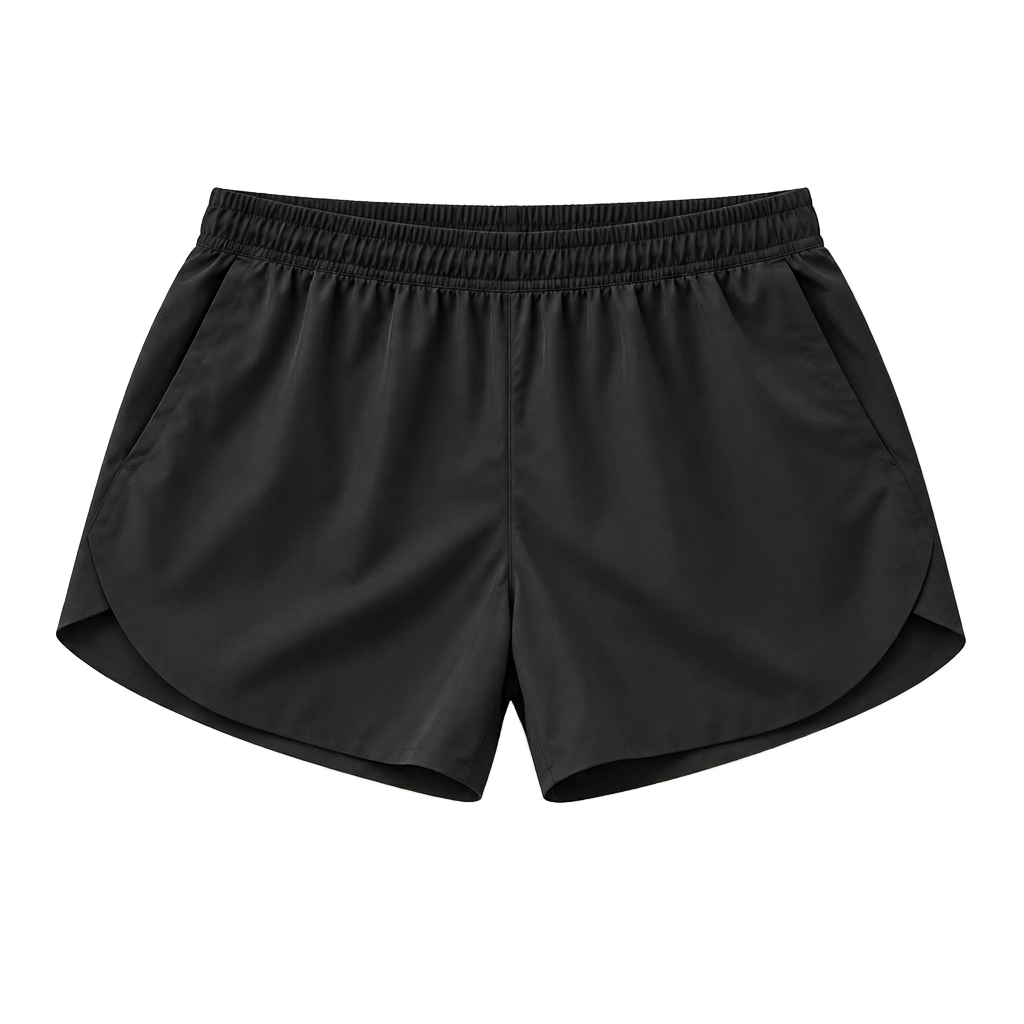
Running Shorts
In 1958, DuPont chemist Joseph Shivers invented a stretchy polyurethane fiber intended for girdles and foundation garments, and named it Spandex — an anagram of "expands." It took another three decades for that fiber to find its real home: blended into sportswear, where four-way stretch went from a novelty to a baseline expectation. That pattern, an adjacent industry's material arriving in sport years after its invention, still describes how most advances in technical apparel manufacturing show up.
The same factories that produce for houses like Celine and Balenciaga can produce this piece, directly to you
GABI
Make it yours
Material gradeMOQ 50
Colour
Running Shorts
In 1958, DuPont chemist Joseph Shivers invented a stretchy polyurethane fiber intended for girdles and foundation garments, and named it Spandex — an anagram of "expands." It took another three decades for that fiber to find its real home: blended into sportswear, where four-way stretch went from a novelty to a baseline expectation. That pattern, an adjacent industry's material arriving in sport years after its invention, still describes how most advances in technical apparel manufacturing show up.
The same factories that produce for houses like Celine and Balenciaga can produce this piece, directly to you
GABI
Make it yours
Material gradeMOQ 50
Colour
In 1958, DuPont chemist Joseph Shivers invented a stretchy polyurethane fiber intended for girdles and foundation garments, and named it Spandex — an anagram of "expands." It took another three decades for that fiber to find its real home: blended into sportswear, where four-way stretch went from a novelty to a baseline expectation. That pattern, an adjacent industry's material arriving in sport years after its invention, still describes how most advances in technical apparel manufacturing show up.
From Girdles to Second Skin
Elastane (Spandex/Lycra) is almost never used alone — it is blended at 5–20% into polyester or nylon, which supply the durability and shape, while the elastane supplies recovery. The ratio is a direct lever on cost and feel: higher elastane content costs more and stretches more, but a fabric that is too elastane-heavy loses its shape retention over repeated wear.
Seam construction splits into two camps. Flatlock stitching sews two fabric edges flat against each other rather than layering them, reducing the chafing ridge a standard seam creates against skin — the standard for base layers and leggings. Bonded or ultrasonically welded seams skip stitching altogether, fusing panels with heat and pressure, which removes needle holes entirely and is why waterproof and highly technical shells use it instead.
Moisture-wicking is a fiber-engineering trick, not a coating: technical yarns are extruded with channels or a hydrophobic-core/hydrophilic-surface structure that pulls sweat away from skin and spreads it across a larger fabric surface to evaporate faster. This is why a wicking claim lives in the yarn spec, not something applied afterward.
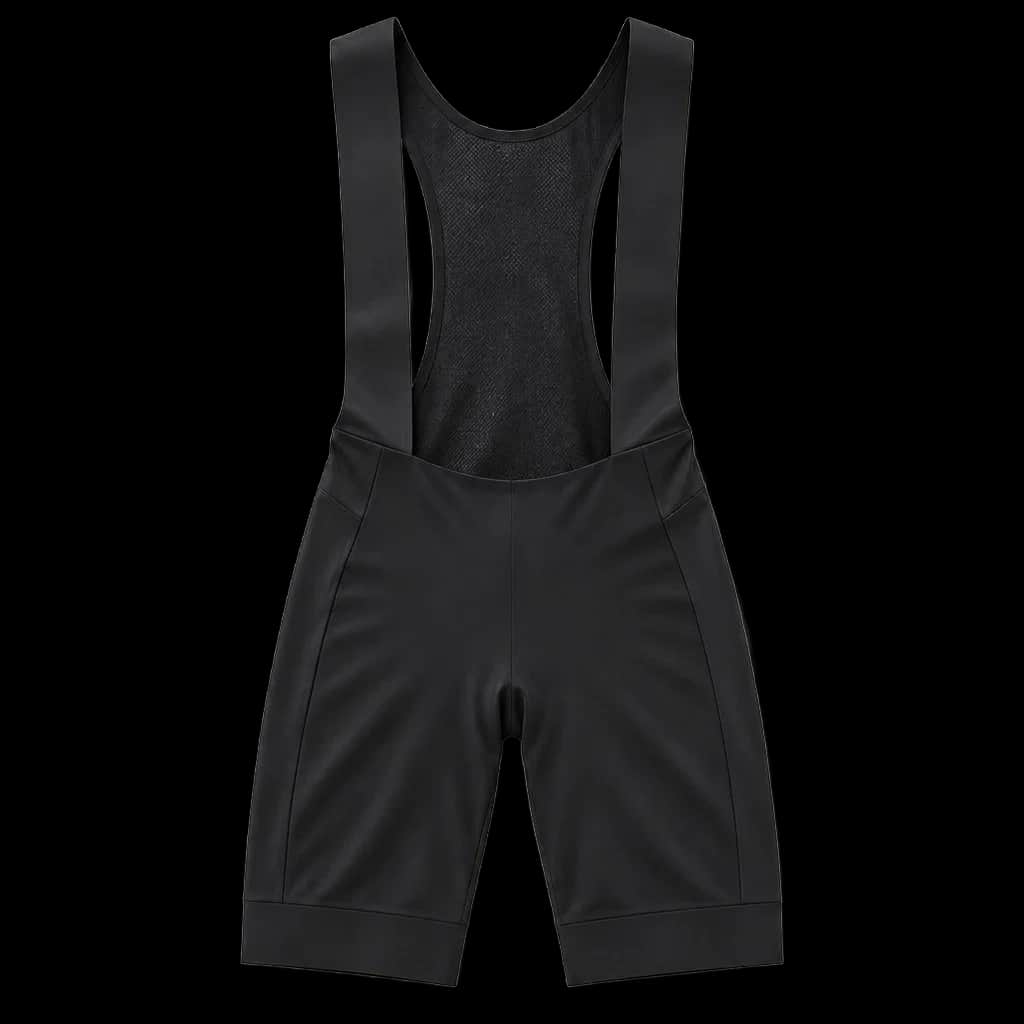
Cycling garments carry the most specialized construction in the category. The chamois pad in bib shorts is graded by foam density and thickness for use duration (a short commute pad differs from a century-ride pad), and panels are cut and seamed specifically to sit flat in a riding position rather than a standing one — a pattern that does not transfer from general activewear blocks.
FAQ
Affordable-tier technical fabric with a clean stitched finish (China, 300–500 unit run) lands around $7–12; premium fabric with softer hand-feel and upgraded trims runs $15–24; luxury-tier specialist technical fabric with bonded details runs $28–45. The jump between tiers is driven by yarn quality and finishing, not garment complexity.
Flatlock stitching lays fabric edges flat to reduce chafing and costs less to produce; bonded or ultrasonically welded seams eliminate needle holes for a fully waterproof or higher-end technical finish but require specialized equipment and cost more per seam. Specify flatlock for base layers, leggings, and everyday training wear; specify bonded for shells, running jackets, and anything claiming water resistance.
Realistically 300–500 units per size run, since technical stretch fabric is sold by the roll and cut-and-sew factories need a minimum yardage to justify a production run, not because of any mold or tooling cost like hard goods.
There's no single mandatory certification — wicking performance is typically self-reported by the fabric mill's own lab testing. Buyers who want independent verification usually ask for OEKO-TEX or bluesign certification instead, which cover chemical safety rather than wicking performance specifically.
A factory that specializes in padded cycling garments specifically — the chamois pad insertion, multi-panel aerodynamic cutting, and flatlock seaming around a padded insert are a different skill set from general activewear cut-and-sew. Confirm the factory has produced chamois-padded shorts before, not just leggings.
The silhouette stays identical across tiers, but the fabric grade, trim quality, and finishing method change — for example, a stitched hem at the affordable tier versus a bonded hem at luxury. This lets one pattern serve three price points without re-engineering the garment each time.
Most knitted technical apparel (T-shirts, leggings, tanks, jerseys) falls under HS Chapter 61; woven pieces like some shells and track pants may fall under HS Chapter 62 instead depending on construction. Confirm per SKU, since knit vs. woven construction — not just the garment type — determines the chapter.