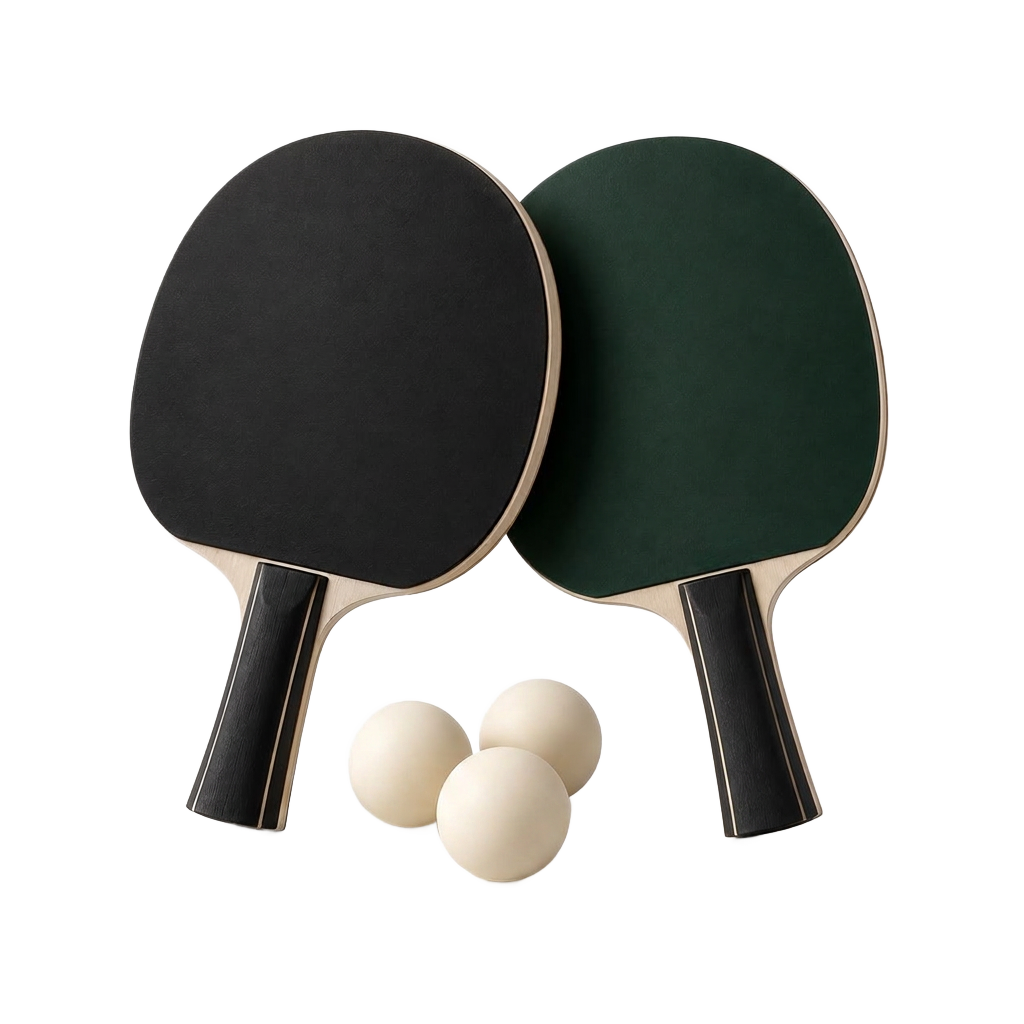
Table Tennis Set
Before 1839, a football was a stitched leather case around a pig's bladder — irregular, prone to bursting mid-match, and different from club to club. Charles Goodyear's discovery of vulcanized rubber that year, followed by the inflatable rubber bladder a couple of decades later, turned the ball into a standardized, mass-producible object for the first time. Within a generation, England's newly formed football associations were writing ball-size and weight rules into the laws of the game — because a codified sport needs a codified ball. That same logic, uniform tooling producing a uniform play experience, still governs how balls, bats, and rackets get made today.
The same factories that produce for houses like Celine and Balenciaga can produce this piece, directly to you
GABI
Make it yours
Material gradeMOQ 50
Colour
Table Tennis Set
Before 1839, a football was a stitched leather case around a pig's bladder — irregular, prone to bursting mid-match, and different from club to club. Charles Goodyear's discovery of vulcanized rubber that year, followed by the inflatable rubber bladder a couple of decades later, turned the ball into a standardized, mass-producible object for the first time. Within a generation, England's newly formed football associations were writing ball-size and weight rules into the laws of the game — because a codified sport needs a codified ball. That same logic, uniform tooling producing a uniform play experience, still governs how balls, bats, and rackets get made today.
The same factories that produce for houses like Celine and Balenciaga can produce this piece, directly to you
GABI
Make it yours
Material gradeMOQ 50
Colour
Before 1839, a football was a stitched leather case around a pig's bladder — irregular, prone to bursting mid-match, and different from club to club. Charles Goodyear's discovery of vulcanized rubber that year, followed by the inflatable rubber bladder a couple of decades later, turned the ball into a standardized, mass-producible object for the first time. Within a generation, England's newly formed football associations were writing ball-size and weight rules into the laws of the game — because a codified sport needs a codified ball. That same logic, uniform tooling producing a uniform play experience, still governs how balls, bats, and rackets get made today.
From Pig's Bladder to Vulcanized Rubber
Early balls were hand-stitched leather panels around an animal-bladder bladder; vulcanized rubber bladders made shape and bounce repeatable for the first time. Panel count and stitching pattern were standardized club by club until the Adidas Telstar's 32-panel black-and-white design, chosen for television visibility at the 1970 World Cup, became the de facto global template.
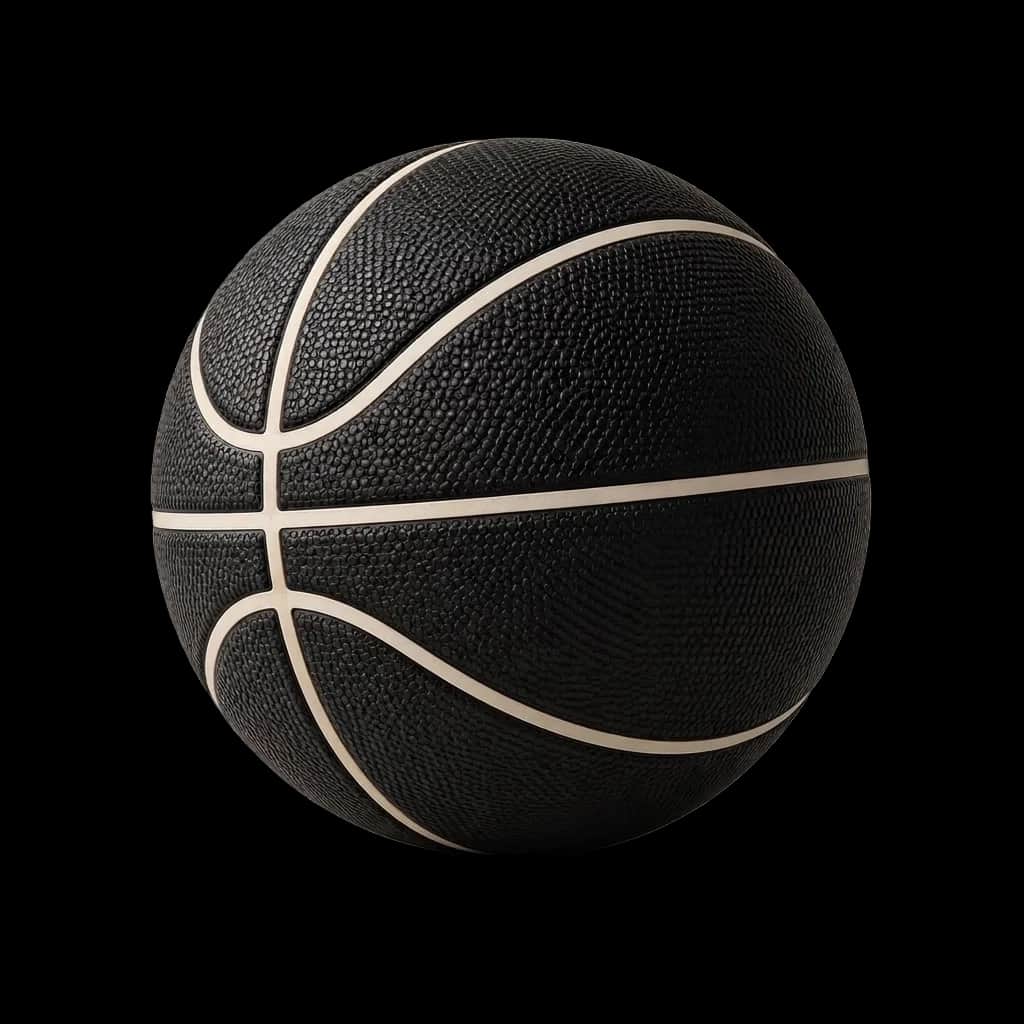
Basketball was invented in 1891 using a plain soccer ball; the pebbled leather surface that defines a basketball today was not introduced until the 1950s, purpose-built for one-handed dribbling grip. Volleyball, invented four years later, deliberately uses a lighter, smoother cover since it is struck open-handed rather than bounced.
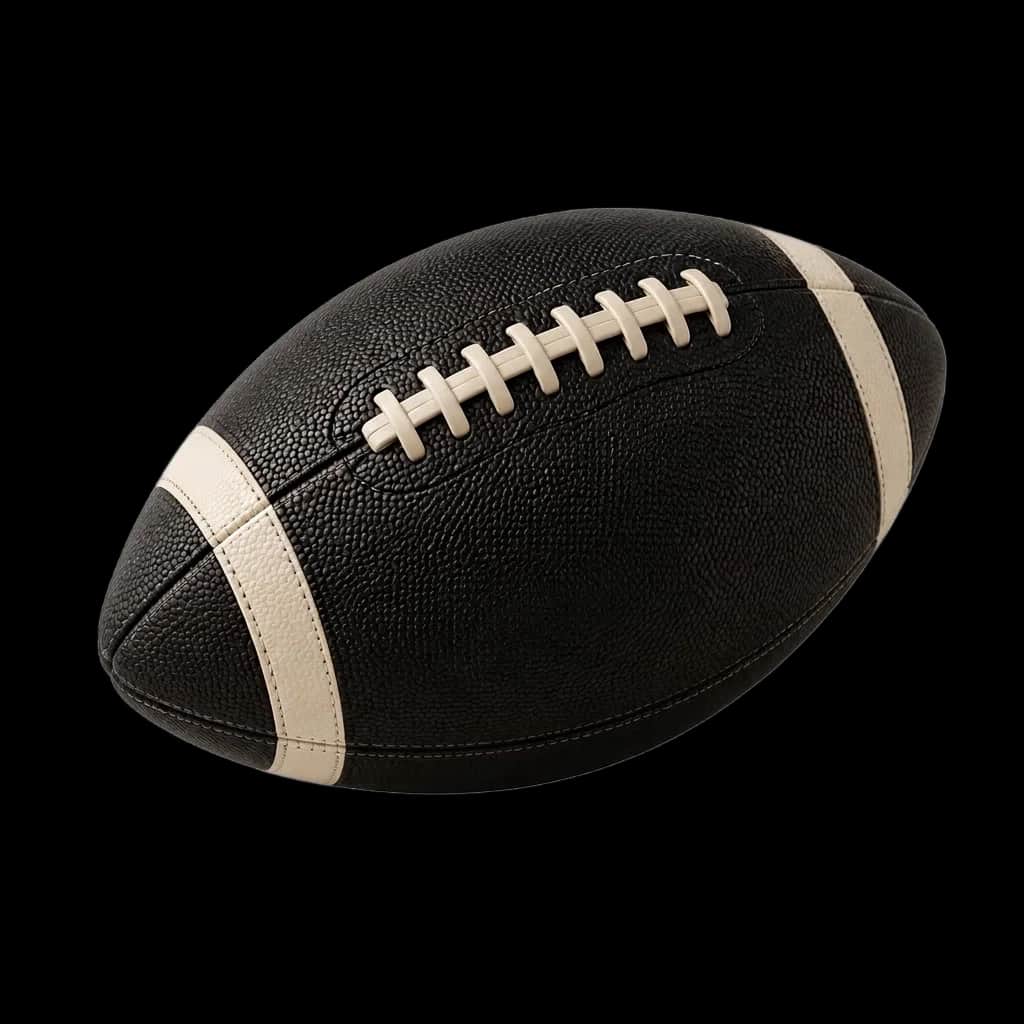
Rugby and American footballs keep the prolate-spheroid shape of the original bladder rather than moving to round panels. Lacing was originally functional — it closed the opening used to insert the bladder — and survives today mostly as a grip aid, functional on American footballs and largely decorative on rugby balls.
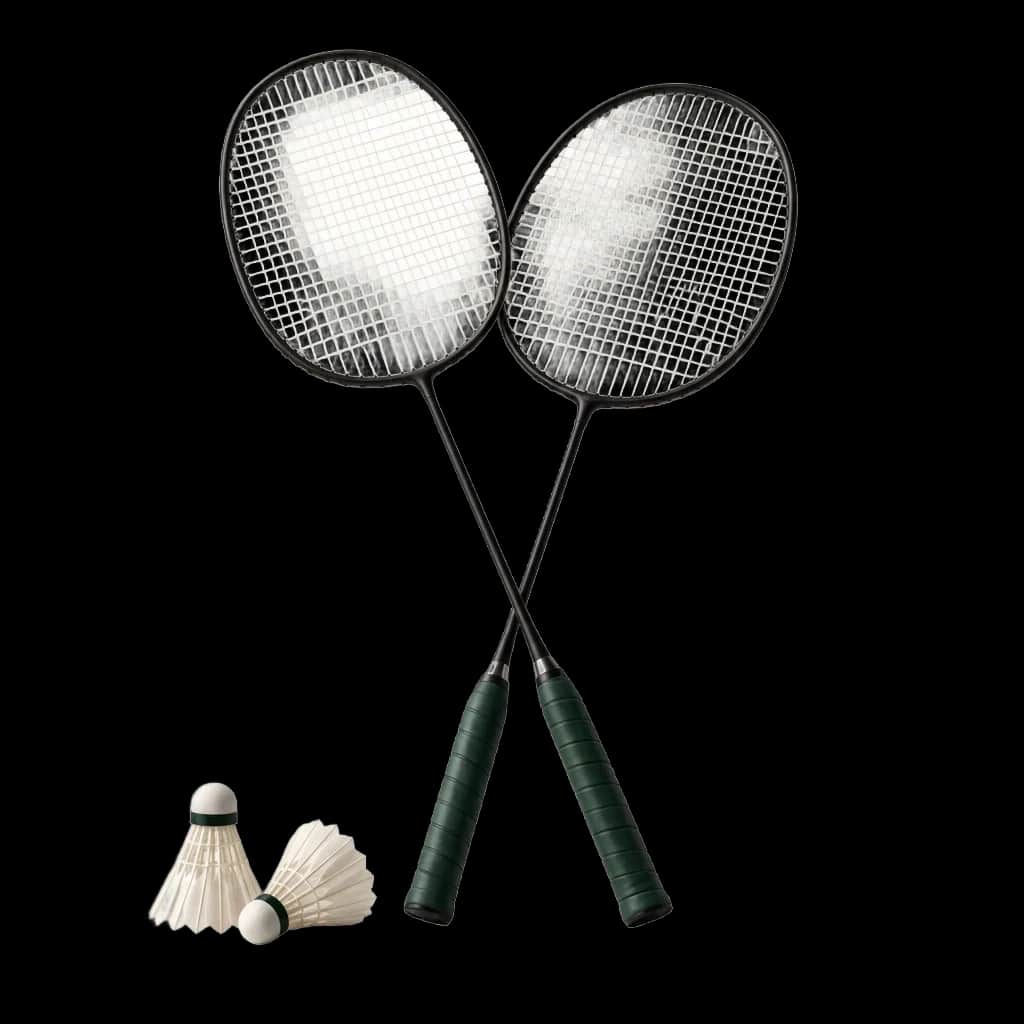
Table tennis balls were celluloid until 2014, when the sport's governing body switched the regulation material to ABS plastic after celluloid's flammability made it a shipping and manufacturing hazard. Badminton shuttlecocks split the same way natural materials split elsewhere in sport: goose-feather shuttlecocks remain the tournament standard for flight consistency, while synthetic nylon skirts dominate recreational and durability-focused sets.
FAQ
A machine-stitched 32-panel PU (polyurethane) ball in a mid-range grade (China, 300–500 unit run) lands around $8–14; hand-stitched or match-quality balls with a multi-layer PU cover run $18–28, driven by stitching labor and lining layers that improve shape retention.
A basketball uses a thick pebbled rubber or composite-leather cover over a butyl bladder for grip and bounce consistency; a volleyball uses a smoother, softer synthetic leather cover since it's struck open-handed rather than dribbled; a football (soccer) uses a stitched or thermally-bonded panel cover over a latex or butyl bladder optimized for flight, not bounce. Each requires different cover tooling — they are not interchangeable constructions.
Realistically 500–1,000 units per size/colorway, since the mold for the bladder and the panel-cutting dies are the main upfront tooling cost; below that, sourcing from an existing panel pattern with custom branding is far more viable than a bespoke panel shape.
Only for competition use. Recreational balls can be sold without certification, but claims like "FIFA Quality Pro" or "official size and weight" require the specific model to pass the governing body's own lab testing (circumference, weight, bounce, water absorption) and appear on their approved list.
Badminton rackets need a factory with graphite/composite shaft molding and stringing capability, similar tooling to tennis rackets at a lighter gauge; table tennis paddles need a plywood-lamination press for the blade and a separate rubber-bonding process for the pips-out or pips-in playing surface. These are different manufacturing lines, not variations of the same one.
Both are prolate spheroids assembled from four curved leather or synthetic panels stitched or bonded around a bladder, rather than the hexagon/pentagon panels used on round balls. The panel curvature has to be cut and molded specifically for that shape, and lacing (functional on some American footballs, decorative on most rugby balls) adds a manual assembly step round balls don't need.
Inflatable balls (football, basketball, volleyball, rugby, American football) generally fall under HS 9506.62; non-inflatable balls and other sports articles like paddles, bats, and rackets fall under HS 9506.99 or the sport-specific subheading. Confirm per SKU, as this category has more HS code fragmentation than most.