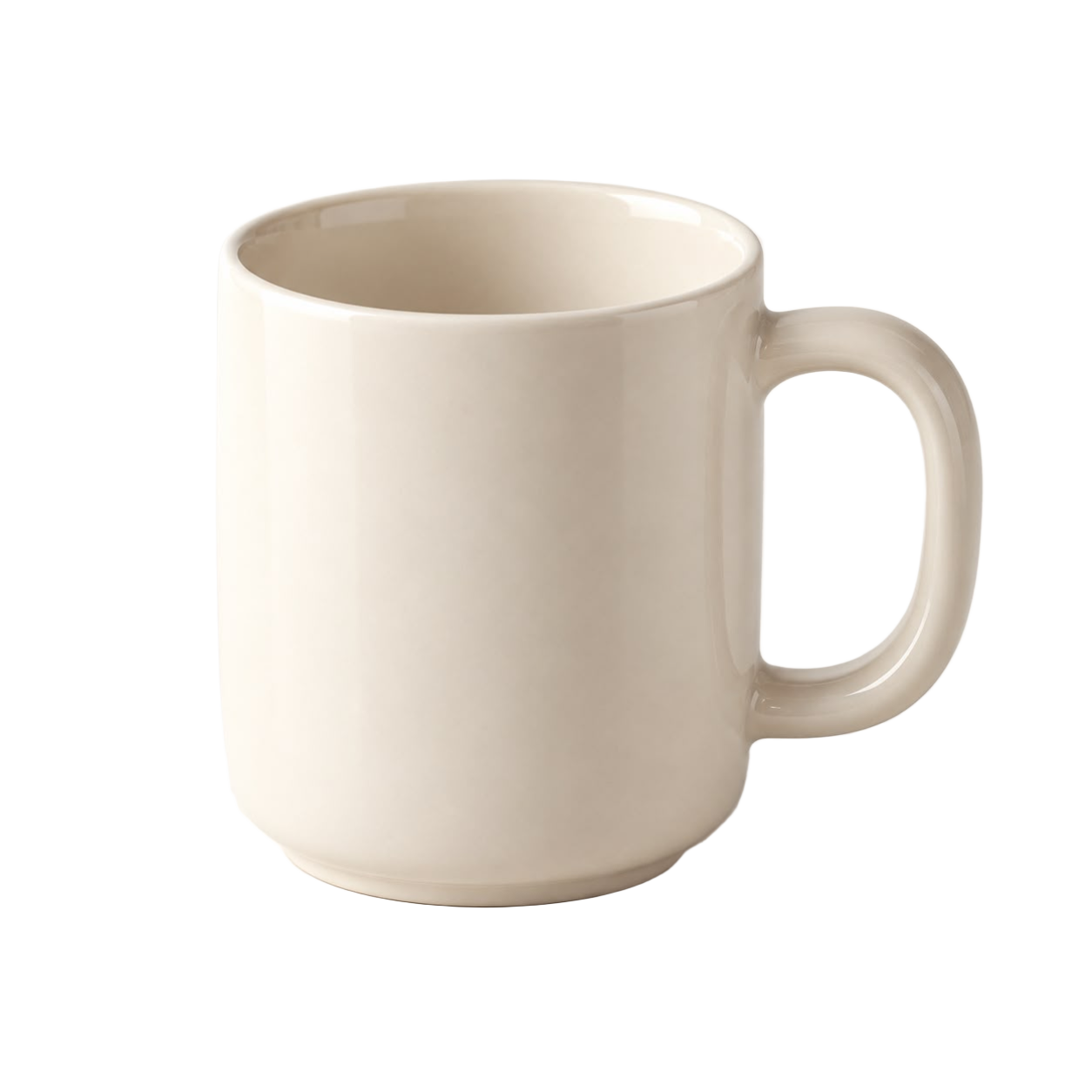
Ceramic Mug
In 18th-century England, what you drank tea from marked exactly where you stood socially: fine porcelain cup and saucer for polite company, a plain earthenware mug with no saucer at all for everyday and working-class use. Josiah Wedgwood and the other Staffordshire potters mass-produced both side by side, and the split survives almost unchanged today — a cup and saucer still signals a slower, more formal occasion, while a mug is what actually sits on a desk.
The same factories that produce for houses like Celine and Balenciaga can produce this piece, directly to you
GABI
Make it yours
Colour
Ceramic Mug
In 18th-century England, what you drank tea from marked exactly where you stood socially: fine porcelain cup and saucer for polite company, a plain earthenware mug with no saucer at all for everyday and working-class use. Josiah Wedgwood and the other Staffordshire potters mass-produced both side by side, and the split survives almost unchanged today — a cup and saucer still signals a slower, more formal occasion, while a mug is what actually sits on a desk.
The same factories that produce for houses like Celine and Balenciaga can produce this piece, directly to you
GABI
Make it yours
Colour
In 18th-century England, what you drank tea from marked exactly where you stood socially: fine porcelain cup and saucer for polite company, a plain earthenware mug with no saucer at all for everyday and working-class use. Josiah Wedgwood and the other Staffordshire potters mass-produced both side by side, and the split survives almost unchanged today — a cup and saucer still signals a slower, more formal occasion, while a mug is what actually sits on a desk.
A Class Divide in Clay
Staffordshire potteries mass-produced formal porcelain cup-and-saucer sets alongside plain earthenware mugs, a divide that still shapes how the two formats are perceived today.
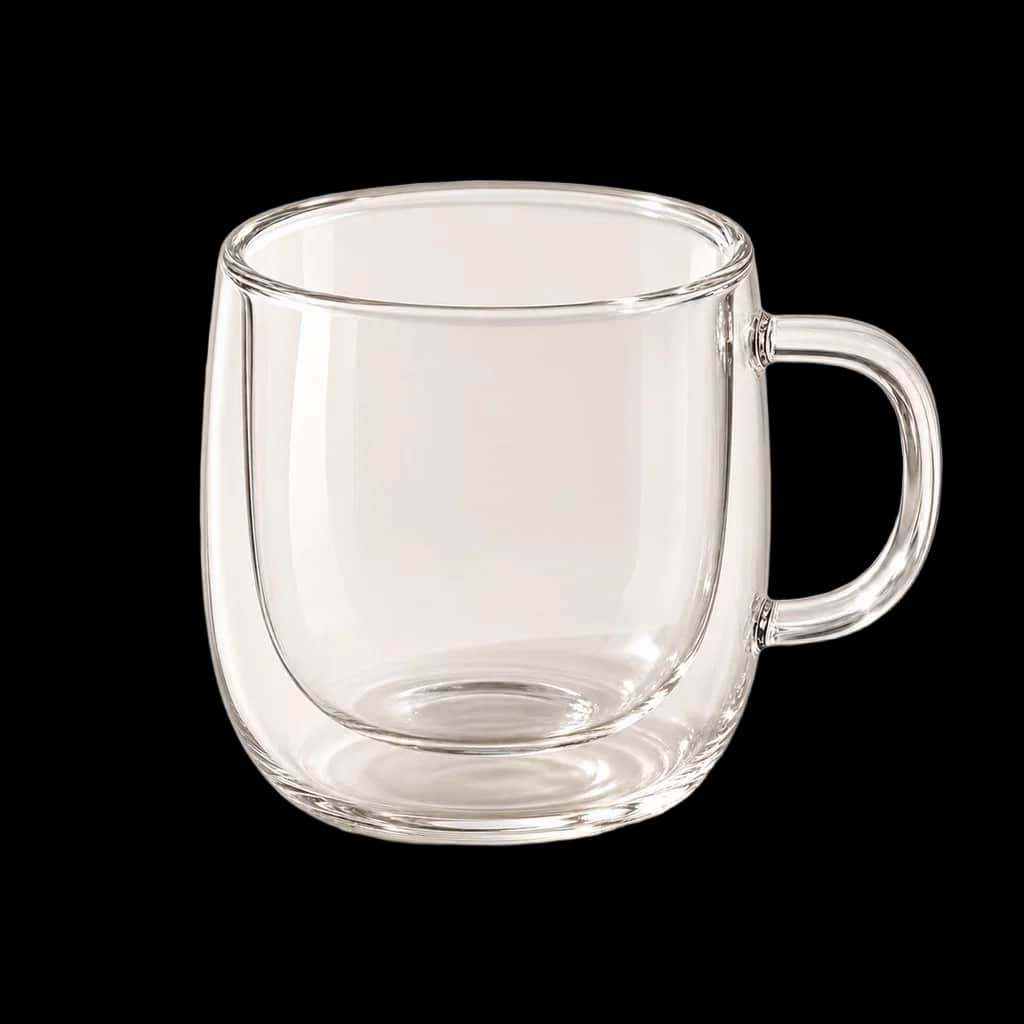
Double-wall glass construction creates an insulating air gap between two glass layers, letting a cup hold a hot drink without becoming too hot to hold while still showing the drink's color.
Tea infuser mugs build a strainer basket directly into the cup, letting loose-leaf tea steep without a separate pot or strainer — a 20th-century convenience addition to the basic mug format.
Ceramic is thicker and more heat-retentive; porcelain is thinner and reads as more formal; glass shows the drink but conducts heat faster, requiring double-wall construction to stay comfortable to hold when hot.
FAQ
Ceramic mugs fall under HS 6912; glass drinkware falls under HS 7013. Confirm per SKU, since ceramic and glass are classified under entirely different chapters.
A standard ceramic mug (China, 300–500 unit run) lands around $2–4; a porcelain cup and saucer set runs $4–8; a double-wall glass coffee cup runs $3–6, driven by the more complex two-layer glass forming process.
Ceramic for everyday durability and heat retention at a lower cost; porcelain for a more refined, formal look at higher cost and fragility; glass when showing the drink's color matters, paired with double-wall construction for hot beverages.
A perforated basket or insert sits inside the mug, holding loose-leaf tea while allowing water to circulate through it; the infuser is lifted out once the tea has steeped, avoiding a separate strainer or teapot.
Typically 300–500 units per design and glaze color, since ceramic firing and glazing are done in kiln batches that need a minimum run to be efficient.
It requires forming two glass layers with a sealed air gap between them, a more complex process than single-wall glass. It's worth the cost when a hot beverage needs to be held comfortably without a sleeve, common in espresso bar settings.
The glaze must be certified food-safe and typically dishwasher- and microwave-safe for practical use; confirm glaze composition, since decorative glazes can vary in food-contact safety standards by market.