
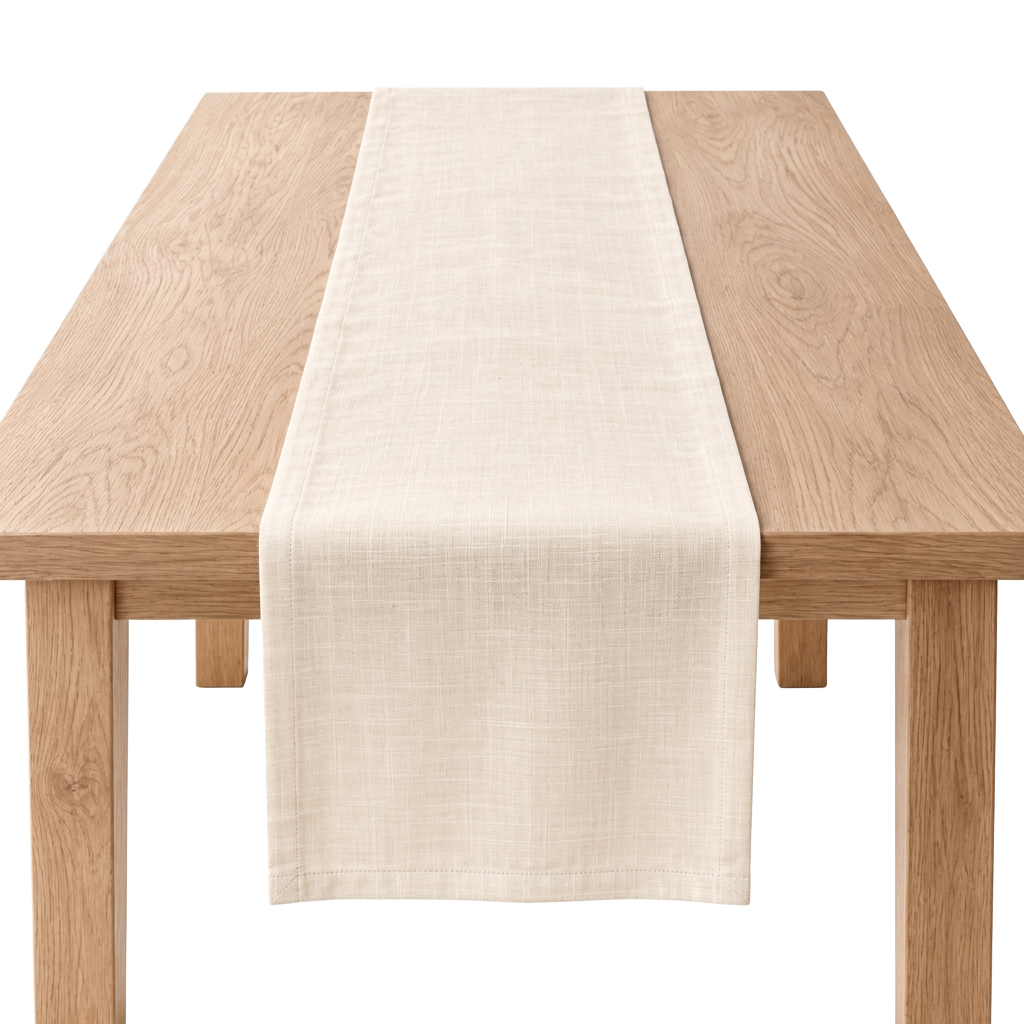
Table Runner
Before forks were common at a European table, diners ate with their hands — and the tablecloth doubled as the communal napkin, meant to be dirtied and changed between courses as a mark of a well-run household. Damask, the reversible patterned weave still used in fine table linen today, takes its name from Damascus, where medieval European traders first encountered the technique in silk. The tablecloth's original job, hygiene dressed up as hospitality, is mostly forgotten, but the weave survived it.
The same factories that produce for houses like Celine and Balenciaga can produce this piece, directly to you
GABI
Make it yours
Material gradeMOQ 50
Colour
Table Runner
Before forks were common at a European table, diners ate with their hands — and the tablecloth doubled as the communal napkin, meant to be dirtied and changed between courses as a mark of a well-run household. Damask, the reversible patterned weave still used in fine table linen today, takes its name from Damascus, where medieval European traders first encountered the technique in silk. The tablecloth's original job, hygiene dressed up as hospitality, is mostly forgotten, but the weave survived it.
The same factories that produce for houses like Celine and Balenciaga can produce this piece, directly to you
GABI
Make it yours
Material gradeMOQ 50
Colour
Before forks were common at a European table, diners ate with their hands — and the tablecloth doubled as the communal napkin, meant to be dirtied and changed between courses as a mark of a well-run household. Damask, the reversible patterned weave still used in fine table linen today, takes its name from Damascus, where medieval European traders first encountered the technique in silk. The tablecloth's original job, hygiene dressed up as hospitality, is mostly forgotten, but the weave survived it.
A Napkin Before There Were Napkins
The tablecloth's original function was communal hand-wiping, a hygiene role now split off entirely into the separate napkin.
Linen offers superior drape and stain release compared to cotton, which is softer and cheaper; cotton-linen blends split the difference and are common in mid-range hospitality table linen.
Damask is a reversible, jacquard-woven pattern, woven directly into the fabric's structure rather than printed on the surface afterward, which is why it costs more than a printed tablecloth but never fades or wears off.
Hospitality table linens go through industrial laundering, higher heat, harsher detergents, and far more frequent washing than any home textile experiences, which is why fiber choice and weave density matter more here than in retail table linen.
FAQ
A cotton-linen blend tablecloth (China, 300–500 unit run) lands around $8–15; matching dinner napkins run $1.50–3 each; a pure linen version of either runs 30–50% higher, driven by linen's higher raw fiber cost.
Linen for the best drape and stain release, at a higher cost; cotton for a softer feel at a lower cost but weaker stain resistance; a cotton-linen blend for a middle ground that's common in hospitality settings balancing cost against durability.
Damask is a reversible pattern woven directly into the fabric structure on a jacquard loom, rather than printed onto a plain weave afterward. That construction costs more upfront but the pattern never fades, cracks, or washes off the way a printed design can.
Typically 300–500 units per size and colorway, since fabric is ordered by the roll and dyeing is done in lots that need a minimum yardage to run economically.
Ask specifically about wash-cycle testing under high-heat commercial conditions, not just home laundering — hospitality table linens are washed far more often and at higher temperatures than retail textiles are ever tested for.
Stain-release finishes are common and often requested for restaurant and event use; flame-retardant treatment requirements vary by market and venue type rather than being universal, so confirm the specific buyer's compliance standard before sourcing.
Tablecloths and napkins generally fall under HS 6302 (table, bed, toilet, and kitchen linen). Confirm the specific subheading based on fiber content, since cotton, linen, and blended fabrics are classified differently for duty purposes.


