Sleep Mask
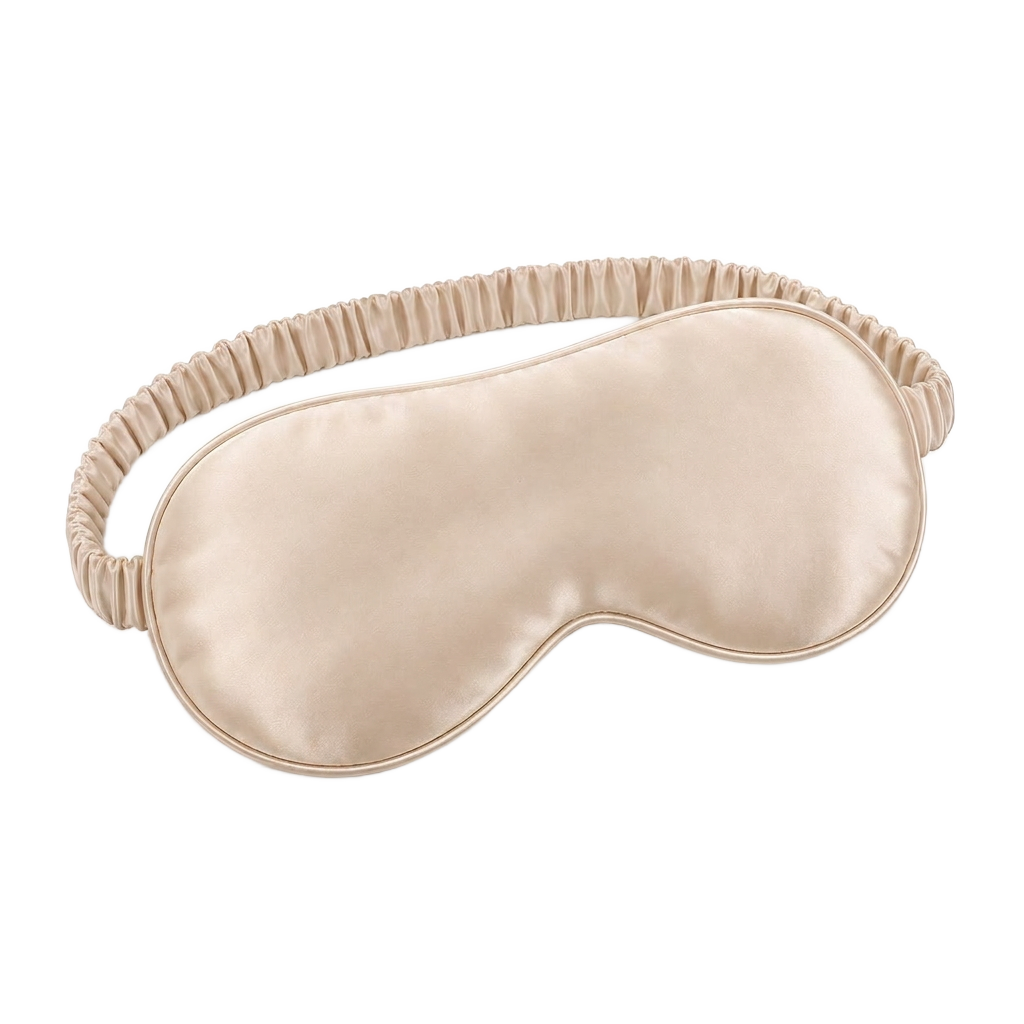
The contoured sleep mask most people picture today didn't start as a bedroom product — airlines began handing out simple cloth eye masks to overnight passengers in the 1950s and '60s, treating darkness as a service amenity on long-haul flights. The padded, molded version, shaped to avoid pressing on the eyelids, came later as manufacturers realized a flat mask that touches the eyes directly disrupts sleep more than it helps. That contour, the small gap that keeps fabric off the eyelid, is the main functional difference between a basic mask and a well-made one.
The same factories that produce for houses like Celine and Balenciaga can produce this piece, directly to you
GABI
Make it yours
Material gradeMOQ 50
Colour
Sleep Mask
The contoured sleep mask most people picture today didn't start as a bedroom product — airlines began handing out simple cloth eye masks to overnight passengers in the 1950s and '60s, treating darkness as a service amenity on long-haul flights. The padded, molded version, shaped to avoid pressing on the eyelids, came later as manufacturers realized a flat mask that touches the eyes directly disrupts sleep more than it helps. That contour, the small gap that keeps fabric off the eyelid, is the main functional difference between a basic mask and a well-made one.
The same factories that produce for houses like Celine and Balenciaga can produce this piece, directly to you
GABI
Make it yours
Material gradeMOQ 50
Colour
The contoured sleep mask most people picture today didn't start as a bedroom product — airlines began handing out simple cloth eye masks to overnight passengers in the 1950s and '60s, treating darkness as a service amenity on long-haul flights. The padded, molded version, shaped to avoid pressing on the eyelids, came later as manufacturers realized a flat mask that touches the eyes directly disrupts sleep more than it helps. That contour, the small gap that keeps fabric off the eyelid, is the main functional difference between a basic mask and a well-made one.
A Travel Amenity First
Airlines popularized the simple eye mask decades before it became a dedicated bedroom product.
Flat masks are two layers of fabric with elastic sewn around the edge, cheap and simple; contoured masks use molded foam or a padded structure that creates space over the eye socket, preventing pressure on the eyelids and eyelashes.
Silk or satin reduces friction against skin and hair, the same logic used in scrunchies, while cotton or synthetic blends are cheaper and more common in basic or single-use travel masks.
A fixed elastic strap is the standard, lower-cost option; an adjustable strap with a buckle or hook-and-loop closure costs more but fits a wider range of head sizes without the "too tight" complaint a fixed strap can't solve.
FAQ
A flat cotton or polyester mask with fixed elastic (China, 500-unit run) lands around $1–2; a contoured, molded mask in silk or satin with an adjustable strap runs $4–8, driven by the molded padding and premium fabric.
Flat for the lowest cost and simplest production, suited to single-use travel or gift-set inclusion; contoured for a premium product where eyelid pressure and comfort during extended wear actually matter.
Silk or satin reduces friction against skin and hair and is marketed on comfort and skincare grounds; cotton or synthetic blends are cheaper and standard for basic or promotional masks where that claim isn't the focus.
Typically 300–500 units per style and fabric combination, since fabric is ordered by the roll and molded foam inserts (for contoured masks) require a minimum run to justify tooling.
An adjustable strap with a buckle or hook-and-loop closure adds a hardware component and assembly step over a simple sewn elastic loop, typically adding $0.50–1.50 per unit, but it fits a wider range of head sizes.
There's no mandatory certification specific to sleep masks, but elastic and any hardware components (buckles, closures) intended for gift sets or children's products should meet standard textile safety requirements for the target market. Confirm requirements based on the buyer and end market.
Sleep masks generally fall under HS 6307 (other made-up textile articles). Confirm the specific subheading if the mask includes non-textile components like a plastic buckle or foam insert, since mixed-material items can shift classification.
