Materials · Cotton · Sourcing
Where Cotton Actually Comes From
Cotton is grown in more than 80 countries — but just two of them, China and India, supply roughly half the world's fiber. Here's who grows what, and why it matters.
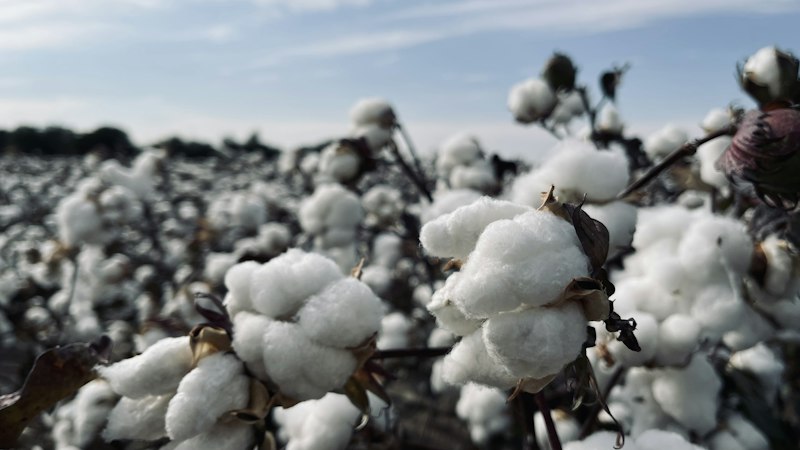
Cotton is grown in more than 80 countries — but just two of them supply roughly half the world's fiber.
The Big Producers
China and India Lead by a Wide Margin#
China produces about 25% of the world's cotton, with volume, short-to-long staple, and a vertically integrated supply chain. India follows closely at roughly 24% — the world's largest producer by planted area, with the most diverse range of grades.
- ~25%
- China
- ~24%
- India
- ~14%
- USA
The Next Tier#
The United States grows about 14%, dominated by highly mechanized farms producing Pima and Supima extra-long-staple cotton. Brazil (~10%) has seen strong growth in production volume with competitive pricing, and Pakistan (~5%) supplies affordable grades backed by a large domestic textile manufacturing base.
Smaller Origins With Outsized Reputations#
Egypt produces only about 1% of the world's cotton, but its Giza extra-long-staple cotton is legendary in luxury shirting. Turkey (~2%) feeds premium European mills from its Aegean basin. West Africa (~4%) relies heavily on smallholder farms and fair trade programs.
Why Origin Still Matters#
Country of origin correlates closely with fiber grade, mill infrastructure, and price tier. Egyptian and American Pima cotton command luxury premiums despite representing a tiny share of global supply, while China and India dominate on sheer volume — origin tells you almost as much about a fabric as the fiber itself.
Next in the Series
Cotton's Water Problem
Cotton Master Reference
Return to: Cotton Master