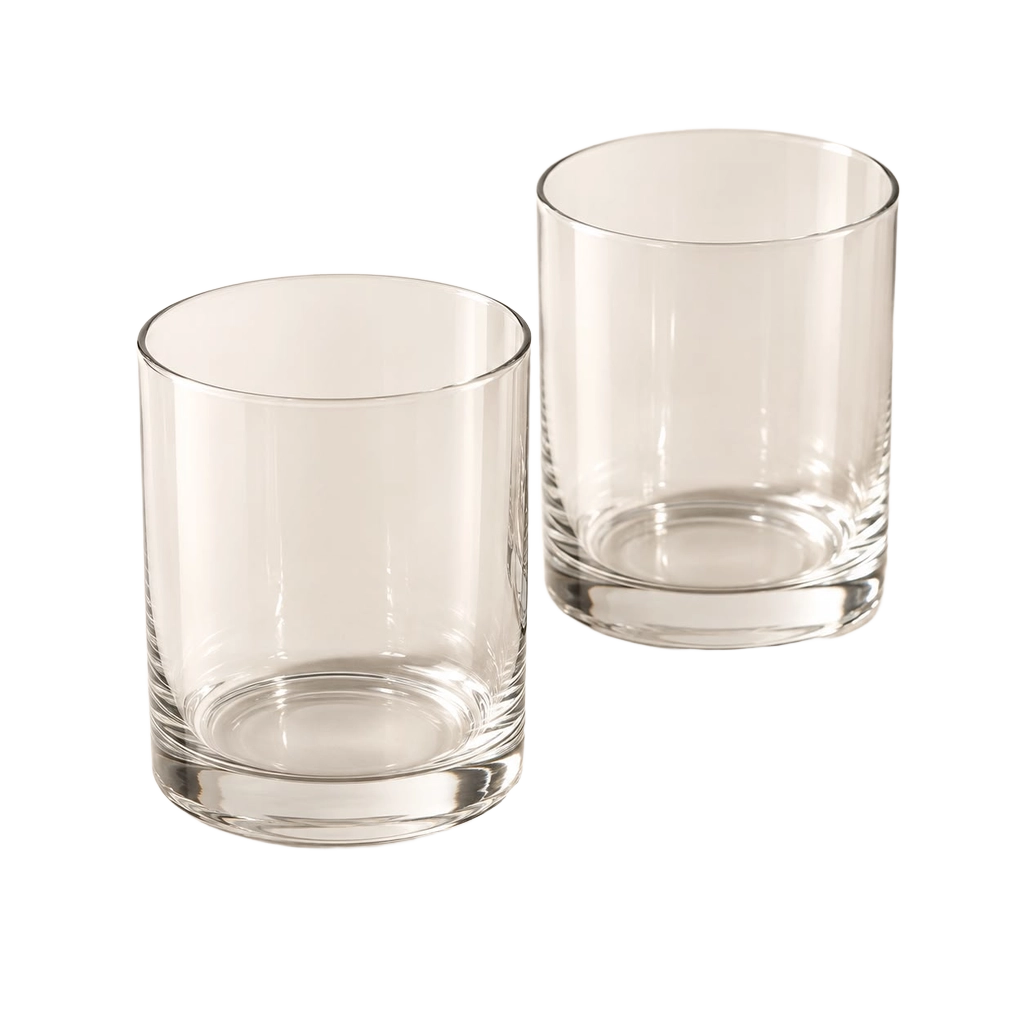
Water Glass Set
For most of the late 20th century, a hotel room's water came in a sealed plastic bottle, restocked daily and thrown away the same day. The glass carafe on a nightstand today is largely a reversal of that habit, driven by 2010s hospitality sustainability commitments phasing out single-use plastic, and its return has more to do with waste reduction than with any change in how water actually needs to be served.
The same factories that produce for houses like Celine and Balenciaga can produce this piece, directly to you
GABI
Make it yours
Colour
Water Glass Set
For most of the late 20th century, a hotel room's water came in a sealed plastic bottle, restocked daily and thrown away the same day. The glass carafe on a nightstand today is largely a reversal of that habit, driven by 2010s hospitality sustainability commitments phasing out single-use plastic, and its return has more to do with waste reduction than with any change in how water actually needs to be served.
The same factories that produce for houses like Celine and Balenciaga can produce this piece, directly to you
GABI
Make it yours
Colour
For most of the late 20th century, a hotel room's water came in a sealed plastic bottle, restocked daily and thrown away the same day. The glass carafe on a nightstand today is largely a reversal of that habit, driven by 2010s hospitality sustainability commitments phasing out single-use plastic, and its return has more to do with waste reduction than with any change in how water actually needs to be served.
Undoing Decades of Disposable Bottles
The glass carafe's return to hotel rooms is a recent sustainability-driven reversal of single-use plastic bottle service, not a change in function.
Glass carries no flavor transfer and is fully recyclable and reusable indefinitely, but is heavier and breakable; reusable plastic is lighter and shatter-resistant but can degrade in clarity and pick up odors over repeated washing.
A carafe and its matching glasses need to come from the same production batch or mold run to avoid visible color or clarity variation between pieces in a set.
Carafes can be open-mouth (simplest and cheapest) or fitted with a glass or cork stopper, which adds a manufacturing step and a second component that must be sized precisely to the carafe's neck.
FAQ
A glass water bottle (China, 300–500 unit run) lands around $2–4; a carafe and matching glass set runs $6–12, driven by the need for matched glass production and the additional glass pieces.
Glass for no flavor transfer and a premium hospitality feel, at higher breakage risk and weight; reusable plastic (like Tritan) for durability and lighter shipping weight, at the cost of some clarity and odor resistance over time.
Not necessarily — an open-mouth carafe is simplest and cheapest; a glass or cork stopper adds a premium touch and helps keep contents fresher, but requires precise sizing to the carafe neck and adds a manufacturing step.
Typically 500–1,000 units per design, since glass molding requires a dedicated mold and a minimum run to make the tooling cost worthwhile.
Glass color and clarity vary slightly between production batches; sourcing all pieces of a set from the same mold run avoids a carafe and its glasses looking subtly mismatched on a table.
Thicker glass (typically specified by weight in grams) resists chipping and breaking better under frequent handling and washing; confirm target weight explicitly, since "glass carafe" alone doesn't specify durability.
Glass carafes, bottles, and glasses generally fall under HS 7013. Confirm the specific subheading based on whether the glass is machine-made or hand-finished, as this can affect classification and duty rates.