
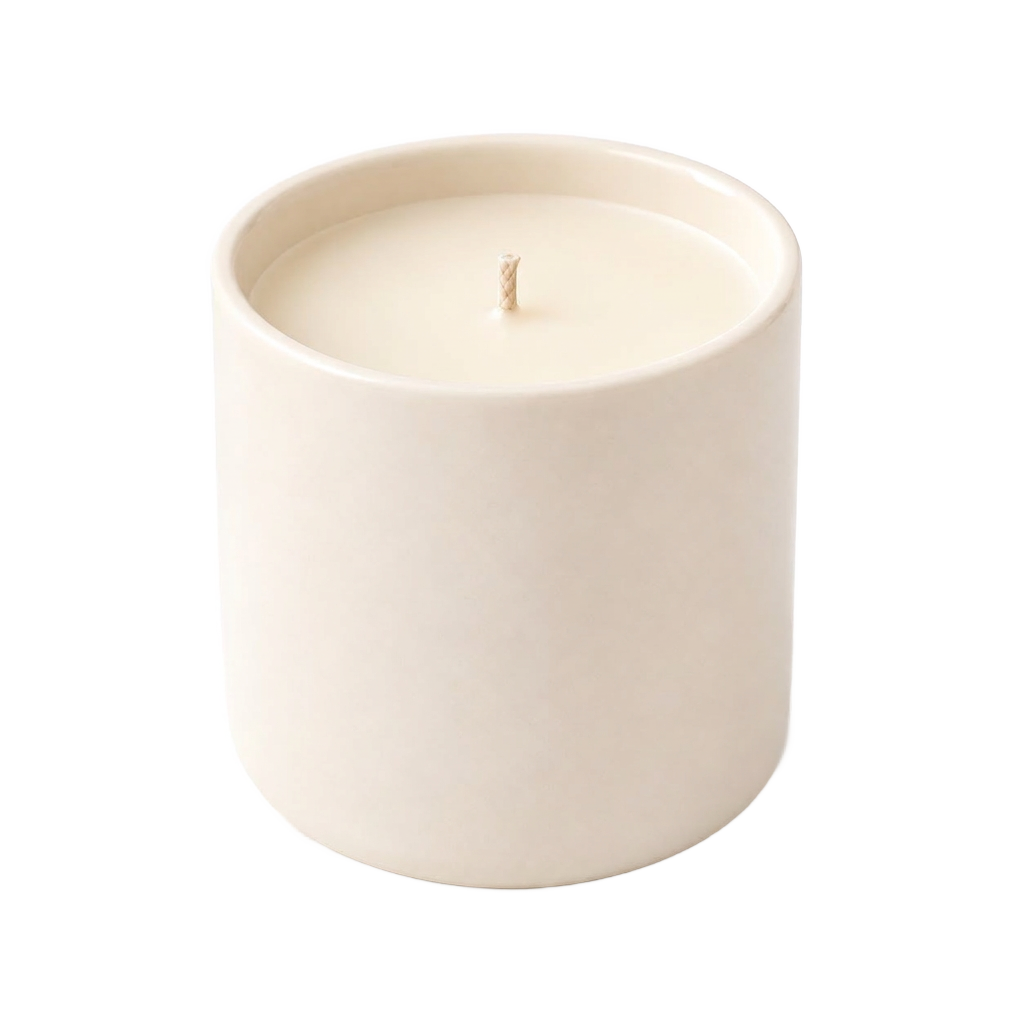
Ceramic Candle
For most of history, a candle was tallow (rendered animal fat) or beeswax, expensive enough that candlelight itself was a mark of status. Paraffin wax, a byproduct discovered during 1850s petroleum refining, made candles cheap enough for daily use for the first time — and remained the default wax for over a century. Soy wax didn't arrive as a competitor until 1992, when an Iowa State University researcher hydrogenated soybean oil into a slow-burning solid, explicitly aiming for something petroleum-free. That timeline, tallow to petroleum to plant oil, is short enough that a soy candle is still, relatively speaking, a new idea.
The same factories that produce for houses like Celine and Balenciaga can produce this piece, directly to you
GABI
Make it yours
Material gradeMOQ 50
Colour
Ceramic Candle
For most of history, a candle was tallow (rendered animal fat) or beeswax, expensive enough that candlelight itself was a mark of status. Paraffin wax, a byproduct discovered during 1850s petroleum refining, made candles cheap enough for daily use for the first time — and remained the default wax for over a century. Soy wax didn't arrive as a competitor until 1992, when an Iowa State University researcher hydrogenated soybean oil into a slow-burning solid, explicitly aiming for something petroleum-free. That timeline, tallow to petroleum to plant oil, is short enough that a soy candle is still, relatively speaking, a new idea.
The same factories that produce for houses like Celine and Balenciaga can produce this piece, directly to you
GABI
Make it yours
Material gradeMOQ 50
Colour
For most of history, a candle was tallow (rendered animal fat) or beeswax, expensive enough that candlelight itself was a mark of status. Paraffin wax, a byproduct discovered during 1850s petroleum refining, made candles cheap enough for daily use for the first time — and remained the default wax for over a century. Soy wax didn't arrive as a competitor until 1992, when an Iowa State University researcher hydrogenated soybean oil into a slow-burning solid, explicitly aiming for something petroleum-free. That timeline, tallow to petroleum to plant oil, is short enough that a soy candle is still, relatively speaking, a new idea.
From Tallow to Petroleum to Soybean
The history above, tracing wax material from animal fat through petroleum refining to plant-oil alternatives.
Cotton wicks burn quietly and evenly, the standard choice; wood wicks add a crackling sound as a deliberate sensory feature but need a wider melt pool to sustain a flame, raising cost slightly.
A single wick works for narrow-diameter vessels; wider vessels need multiple wicks (commonly three) to melt the wax evenly across the surface and avoid "tunneling," where wax burns down the middle and leaves unused wax stranded at the edges.
Fragrance load, the percentage of fragrance oil by wax weight, typically runs 6–10% for a standard scented candle and up to 12% for a stronger throw; going higher risks the wax not holding the oil properly and affects flashpoint safety.
FAQ
A single-wick paraffin candle in a basic glass vessel (China, 300–500 unit run) lands around $2–4; a soy wax candle with the same vessel runs $3.50–6, driven by soy wax's higher material cost; a ceramic-vessel candle adds $2–5 depending on the ceramic finish.
Soy burns cleaner with less soot, a meaningful factor in enclosed spaces, and costs more than paraffin; coconut wax blends split the difference, offering a cleaner burn than pure paraffin at a lower cost than pure soy. Paraffin remains the cheapest option where soot isn't a primary concern.
Cotton wicks burn quietly and evenly and are the standard, lower-cost choice; wood wicks add a crackling sound as a sensory feature but need a wider wax pool to sustain the flame, which slightly raises both material cost and vessel-diameter requirements.
Single wick for narrow-diameter vessels; three wicks for wider vessels, since a single wick in a wide candle burns a tunnel down the middle and leaves wax stranded at the edges rather than melting evenly.
It's the percentage of fragrance oil by weight in the finished wax, typically 6–10%, up to 12% for a stronger throw. Going higher risks the wax not holding the oil properly and can affect the candle's flashpoint safety, so it should be specified and tested, not guessed at.
Typically 300–500 units per scent and vessel combination, since fragrance blending and wax pouring are both done in batches sized to justify the setup cost.
Candles generally fall under HS 3406. Confirm whether any local import restrictions apply to specific wax types or fragrance oil content, since candles can occasionally be subject to additional flammable-goods documentation for freight.


