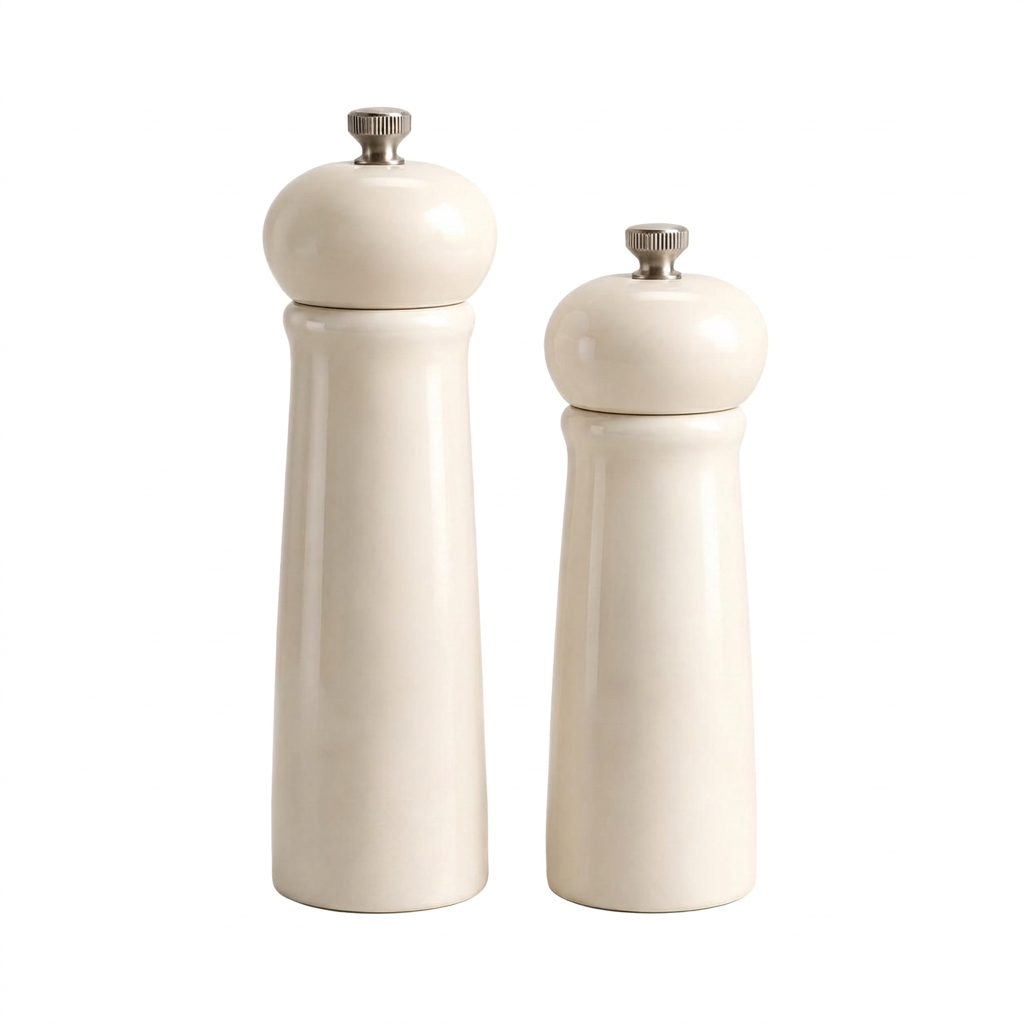
Salt and Pepper Mills
Peugeot, the French company now known for cars, started in steel milling, and in 1874 turned that precision-grinding expertise toward a much smaller product: an adjustable pepper mill. The mechanism, a hardened steel grinding wheel with a screw that adjusts coarseness, hasn't fundamentally changed since, and Peugeot mills are still a reference standard in professional kitchens a century and a half later, run by the same industrial engineering logic the company later applied to cars.
The same factories that produce for houses like Celine and Balenciaga can produce this piece, directly to you
GABI
Make it yours
Material gradeMOQ 50
Colour
Salt and Pepper Mills
Peugeot, the French company now known for cars, started in steel milling, and in 1874 turned that precision-grinding expertise toward a much smaller product: an adjustable pepper mill. The mechanism, a hardened steel grinding wheel with a screw that adjusts coarseness, hasn't fundamentally changed since, and Peugeot mills are still a reference standard in professional kitchens a century and a half later, run by the same industrial engineering logic the company later applied to cars.
The same factories that produce for houses like Celine and Balenciaga can produce this piece, directly to you
GABI
Make it yours
Material gradeMOQ 50
Colour
Peugeot, the French company now known for cars, started in steel milling, and in 1874 turned that precision-grinding expertise toward a much smaller product: an adjustable pepper mill. The mechanism, a hardened steel grinding wheel with a screw that adjusts coarseness, hasn't fundamentally changed since, and Peugeot mills are still a reference standard in professional kitchens a century and a half later, run by the same industrial engineering logic the company later applied to cars.
A Car Company's Steel-Milling Past
Peugeot's 1874 pepper mill applied precision steel-grinding expertise the company later carried into automotive manufacturing.
A mill with an adjustable grinding mechanism produces fresh, variable-coarseness output at the moment of use, versus a simple shaker that dispenses pre-ground product with no texture control — a functionally different tool, not just a different container.
Ceramic grinding mechanisms resist the corrosion that salt causes in steel over time and are the standard for salt mills, while steel mechanisms remain standard for pepper, which isn't corrosive.
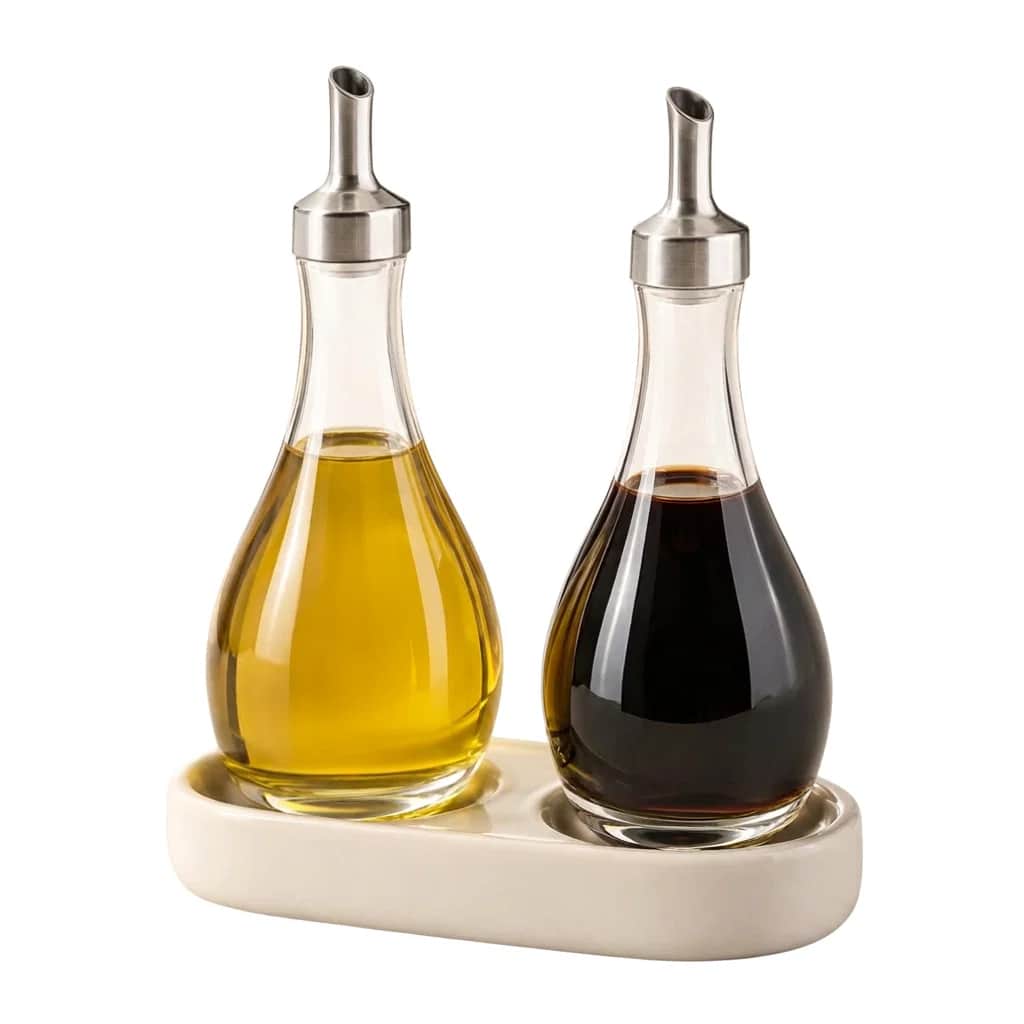
A cruet needs a pour spout or stopper engineered to control flow rate, a thin, controlled stream for oil since it's used sparingly, versus a less restrictive spout for vinegar, which is often poured more liberally.
FAQ
A basic wood-bodied pepper mill with a steel mechanism (China, 300–500 unit run) lands around $3–6; a salt mill with a ceramic mechanism runs $4–7; an oil and vinegar cruet set runs $6–12 in glass.
Ceramic for salt mills, since salt corrodes steel mechanisms over time; steel for pepper mills, which isn't corrosive and benefits from steel's sharper, longer-lasting grind edge.
A mill grinds fresh at the moment of use with adjustable coarseness; a shaker dispenses pre-ground product with no texture control. Mills read as more premium for gifting; shakers are simpler and cheaper for everyday or high-turnover commercial use.
Typically 300–500 units per material and finish, since wood turning, glass forming, and mechanism assembly all carry setup costs that need volume to be efficient.
A narrower, more restrictive spout for oil, since it's typically used in small amounts; a slightly wider spout for vinegar, which is often poured more liberally. The two shouldn't use an identical spout design.
Glass is standard, since it doesn't react with or absorb flavor from oil or vinegar; ceramic is an alternative for a different visual style but is heavier and opaque, hiding the fill level.
Mills with a mechanical grinding mechanism generally fall under HS 8210; simple cruets and shakers without a mechanism fall under HS 7013 (glass) or HS 6912 (ceramic). Confirm per SKU based on mechanism presence and material.