
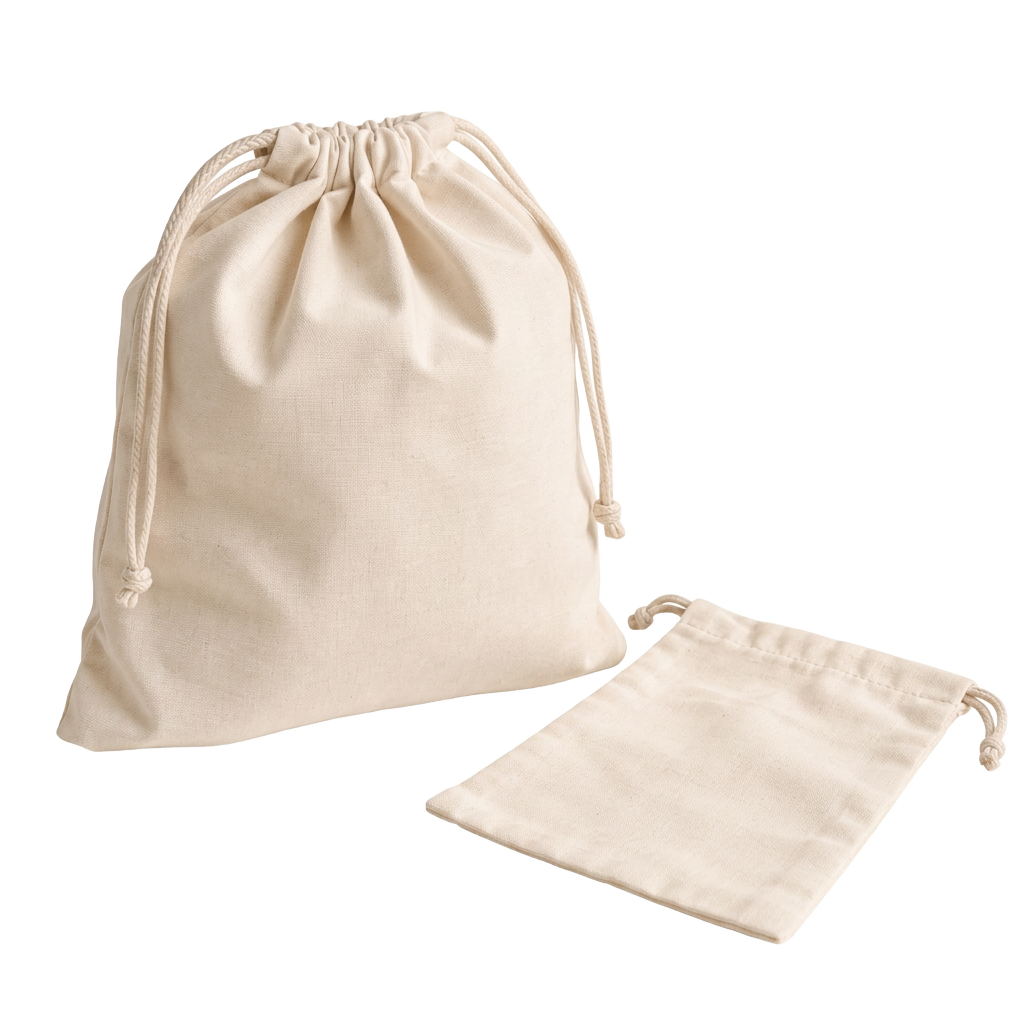
Fabric Gift Bag & Dust Bag
A dust bag started as exactly what its name says: a plain cotton sack to keep dust and light off a stored leather handbag. Luxury houses eventually noticed customers were keeping the bags visible on shelves as a status marker in their own right, and began printing logos and using branded drawstring cords on what had been purely functional packaging. The shift, from a hidden protective layer to a displayed accessory, is why a dust bag today gets specified with almost as much care as the product it holds.
The same factories that produce for houses like Celine and Balenciaga can produce this piece, directly to you
GABI
Make it yours
Material gradeMOQ 50
Colour
Fabric Gift Bag & Dust Bag
A dust bag started as exactly what its name says: a plain cotton sack to keep dust and light off a stored leather handbag. Luxury houses eventually noticed customers were keeping the bags visible on shelves as a status marker in their own right, and began printing logos and using branded drawstring cords on what had been purely functional packaging. The shift, from a hidden protective layer to a displayed accessory, is why a dust bag today gets specified with almost as much care as the product it holds.
The same factories that produce for houses like Celine and Balenciaga can produce this piece, directly to you
GABI
Make it yours
Material gradeMOQ 50
Colour
A dust bag started as exactly what its name says: a plain cotton sack to keep dust and light off a stored leather handbag. Luxury houses eventually noticed customers were keeping the bags visible on shelves as a status marker in their own right, and began printing logos and using branded drawstring cords on what had been purely functional packaging. The shift, from a hidden protective layer to a displayed accessory, is why a dust bag today gets specified with almost as much care as the product it holds.
From Protective Sack to Status Object
The dust bag's shift from purely functional storage to a branded accessory in its own right.
Non-woven polypropylene is the cheapest and most common fabric, with a disposable feel; woven cotton or flannel is softer, more durable, and reusable, associated with higher perceived value; microfiber offers the best scratch protection for delicate finishes like patent leather or metal hardware.
The drawstring closure's cord (cotton cord, satin ribbon, or a branded jacquard-woven cord) and the grommet or eyelet reinforcement at the closure point both affect how well the bag survives repeated opening and closing without tearing.
A dust bag or gift bag needs generous sizing relative to its contents, since it must accommodate the product being placed in and removed repeatedly, unlike a garment that needs a precise fit.
FAQ
A non-woven polypropylene bag (China, 500-unit run) lands around $0.50–1; a woven cotton or flannel bag runs $1.50–3; a microfiber version for delicate-finish products runs $2–4.
Non-woven for the lowest cost and a functional, disposable feel; woven cotton or flannel for a reusable, higher-perceived-value bag; microfiber when the product inside has a delicate finish (patent leather, polished metal) that needs extra scratch protection.
Cotton cord is the standard, low-cost option; satin ribbon adds a premium look at a small cost increase; a branded jacquard-woven cord costs more but keeps branding consistent with woven lanyards or labels elsewhere in a product line.
Typically 500–1,000 units per size and fabric combination, since fabric is ordered by the roll and cutting patterns need a minimum run to be efficient.
It has to accommodate the product being placed in and removed repeatedly over years of use, unlike a fitted garment — a bag sized too closely to the product becomes difficult to use and risks tearing at the seams from the strain.
A printed or embroidered logo adds a modest cost (screen printing is cheaper, embroidery costs more but feels more premium), and is generally worth it for a dust bag that customers are likely to keep and display rather than discard.
These generally fall under HS 6307 (other made-up textile articles). Confirm the specific subheading based on fiber content, since cotton and synthetic fabrics may be classified differently for duty purposes.


