
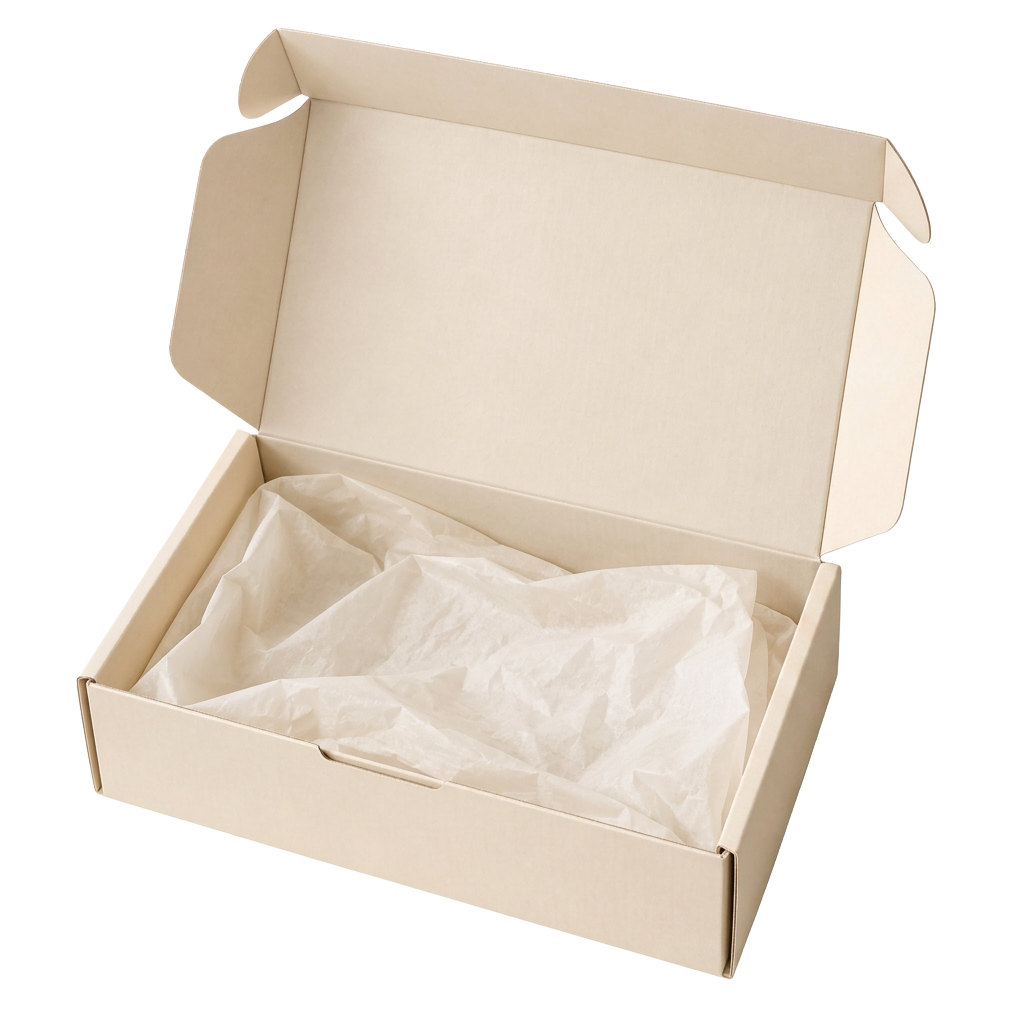
Premium Mailer Box
Margaret Knight patented the machine that makes a flat-bottomed paper bag in 1871, after a man who saw her wooden prototype tried to patent the idea himself and claimed a woman couldn't have designed it. She won the resulting legal fight and the patent. Corrugated cardboard, the material behind nearly every shipping mailer today, has a stranger origin still: it was invented in 1856 to stiffen the inside of top hats, and wasn't repurposed into a shipping box until decades later.
The same factories that produce for houses like Celine and Balenciaga can produce this piece, directly to you
GABI
Make it yours
Material gradeMOQ 50
Colour
Premium Mailer Box
Margaret Knight patented the machine that makes a flat-bottomed paper bag in 1871, after a man who saw her wooden prototype tried to patent the idea himself and claimed a woman couldn't have designed it. She won the resulting legal fight and the patent. Corrugated cardboard, the material behind nearly every shipping mailer today, has a stranger origin still: it was invented in 1856 to stiffen the inside of top hats, and wasn't repurposed into a shipping box until decades later.
The same factories that produce for houses like Celine and Balenciaga can produce this piece, directly to you
GABI
Make it yours
Material gradeMOQ 50
Colour
Margaret Knight patented the machine that makes a flat-bottomed paper bag in 1871, after a man who saw her wooden prototype tried to patent the idea himself and claimed a woman couldn't have designed it. She won the resulting legal fight and the patent. Corrugated cardboard, the material behind nearly every shipping mailer today, has a stranger origin still: it was invented in 1856 to stiffen the inside of top hats, and wasn't repurposed into a shipping box until decades later.
A Patent Fight and a Hat-Lining Material
The histories of the flat-bottomed paper bag and corrugated cardboard, two packaging staples with origins nothing to do with packaging.
A paper shopping bag's flat bottom and twisted paper or ribbon handles are glued or riveted at the attachment points, and paper weight (GSM) directly determines how much load the bag can carry without tearing.
Mailer boxes use single-wall or double-wall corrugated fluting; larger flute sizes give more cushioning and crush resistance, while smaller flutes give a thinner, more premium unboxing feel at the cost of some protection.
Branding can be printed directly on the corrugate via flexographic printing (cheaper, lower color detail) or applied as a separate printed label or wrap (higher detail and color accuracy, with an added labor step).
FAQ
A standard paper shopping bag (China, 500-unit run) lands around $0.80–1.80; a single-wall corrugated mailer box runs $1.50–3; a double-wall version for heavier or fragile items runs $3–5.
Twisted paper cord is the standard, cost-effective choice; ribbon handles add a premium feel at slightly higher cost; die-cut integrated handles (cut directly from the bag material) are the cheapest but offer less load capacity.
Larger flutes (like B-flute) for better cushioning and crush resistance on heavier or fragile items; smaller flutes (like E-flute) for a thinner wall and more premium, compact unboxing feel on lighter items.
Typically 500–1,000 units per size and print design, since both bag-making and corrugated box printing carry setup costs that need volume to justify.
Flexographic printing direct on the corrugate is cheaper and fine for simple logos and low color counts; an applied printed label or wrap costs more but delivers sharper detail and more accurate color matching.
Double-wall is worth it for heavier products, fragile contents, or long-distance freight where crush resistance meaningfully reduces damage claims; for light, sturdy products shipped short distances, single-wall is usually sufficient and cheaper.
Paper shopping bags generally fall under HS 4819.40; corrugated shipping boxes fall under HS 4819.10. Confirm per SKU, since paper weight and construction can affect the specific subheading.


